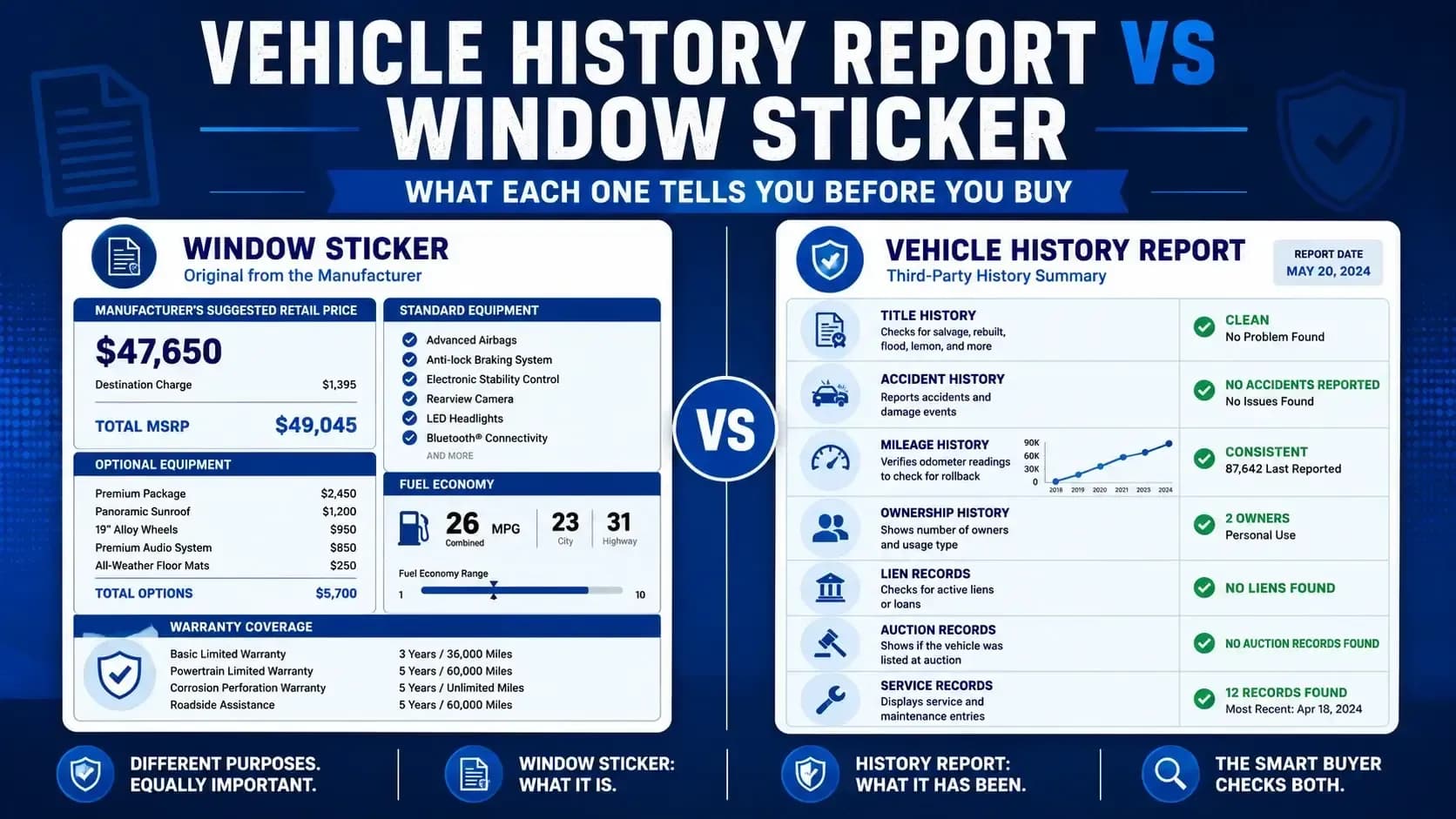
A vehicle history report vs window sticker comparison comes down to two different questions. The window sticker shows how the vehicle was built and priced when new. The history report shows what may have happened after it entered service.
For a used Ford, a Ford vehicle history report can help you review reported title, accident, mileage, ownership, lien, theft, auction, and service records. The original window sticker serves another purpose: it verifies factory equipment, packages, colors, MSRP, and standard features.
Neither document replaces the other. That’s the important part.
Key Takeaways
- A window sticker explains the vehicle’s original factory configuration and price.
- A history report may reveal reported events from the vehicle’s life after sale.
- Many buyers need both because factory identity and past condition are separate questions.
Two Records, Two Different Parts of the Vehicle’s Story
The easiest way to understand the difference between a window sticker and vehicle history report is to picture a used vehicle as a house.
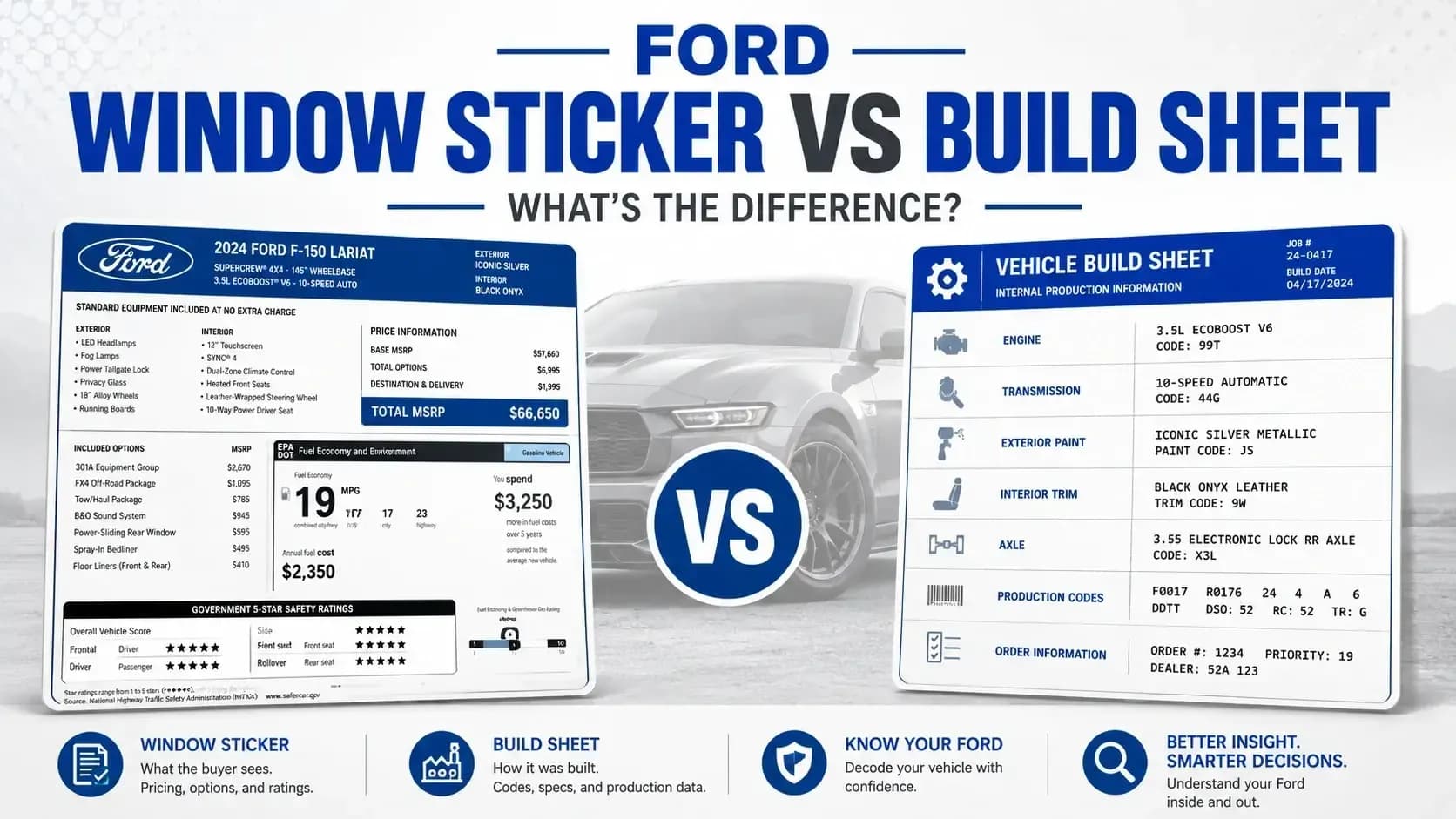
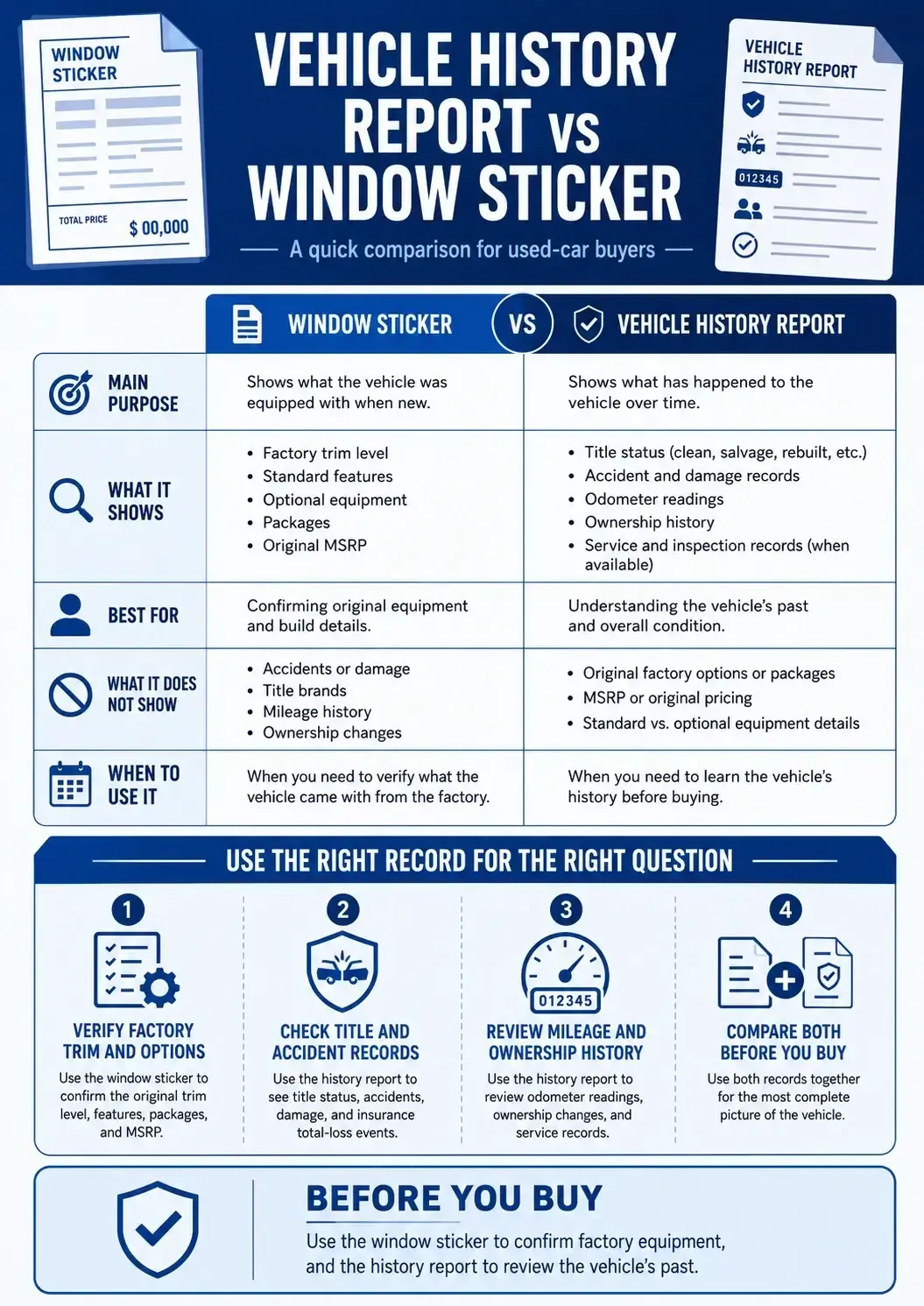
The window sticker is the original building plan. It tells you what Ford intended to install: engine, trim, options, packages, colors, and equipment. The history report is closer to the ownership and repair file. It may contain accidents, title changes, mileage readings, auction entries, liens, and other recorded events.
Used-car shoppers often mix these roles. A clean history report does not prove the vehicle has a factory towing package. An impressive window sticker does not prove the vehicle avoided collision damage.
| Record | Main Question It Answers |
|---|---|
| VIN decoder | Does the basic vehicle identity match the listing? |
| Window sticker | How was the vehicle built and priced when new? |
| Vehicle history report | What reported events happened after it entered service? |
| Inspection | What condition is the vehicle in today? |
← Scroll horizontally to see more →
Each record fills a different gap. Together, they give the buyer a clearer picture.
What Does a Window Sticker Show?
A window sticker is a factory sales document. It is most useful when you need to confirm how a Ford was originally configured rather than what happened during later ownership.
Four details usually matter most.
Original Trim and Standard Equipment
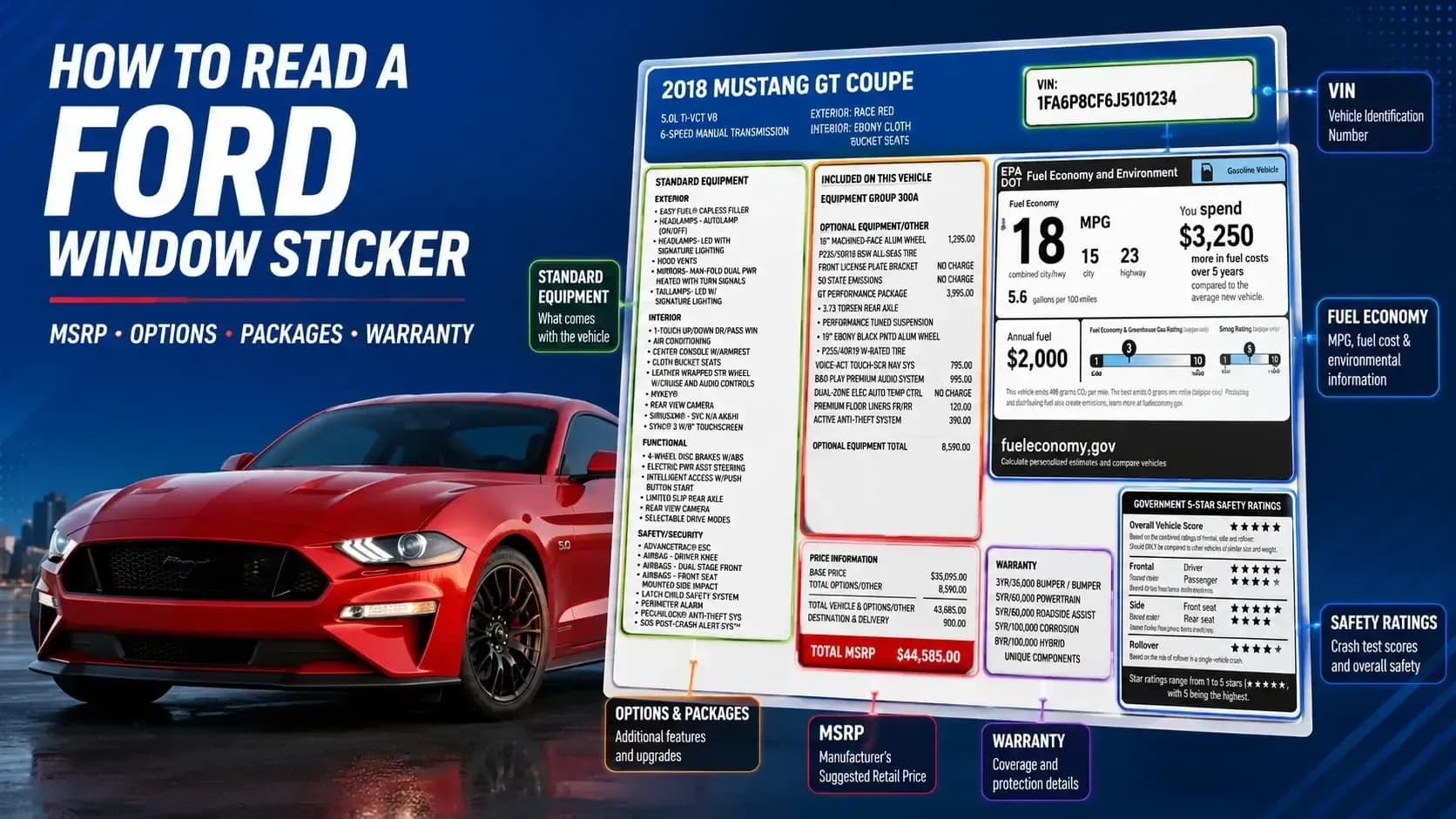
The sticker may confirm the original model, trim or series, body configuration, and features included as standard equipment when the vehicle was new.
Factory Options and Packages
It may list towing, appearance, technology, off-road, safety, wheel, seating, and performance packages selected during the original factory order.
MSRP and Added Charges
The document can show base MSRP, option prices, destination charges, and total suggested retail price before taxes, discounts, or dealer-installed accessories.
Colors, Fuel Economy, and Warranty
Depending on the model year, it may include exterior color, interior trim, fuel economy estimates, safety information, and original warranty details.
This is why a sticker matters when a seller claims “fully loaded,” “factory tow package,” or “rare appearance package.” Those phrases sound persuasive, but the sticker gives you factory evidence to compare.
The guide on how to read a Ford window sticker explains what each section means.
What Does a Vehicle History Report Show?
A vehicle history report focuses on reported events linked to the VIN. It cannot describe every mile the vehicle has traveled, but it may reveal patterns and risks that remain invisible during a short test drive.
The available information usually falls into four groups.
Title and Brand Records
The report may show clean, salvage, rebuilt, flood, junk, lemon, or manufacturer-buyback title information when those records are available.
Accident and Damage History
It may include reported crashes, insurance losses, damage descriptions, auction notes, or structural concerns tied to the vehicle.
Mileage and Ownership History
Odometer readings, registration events, owner counts, fleet use, lease use, rental use, or commercial use may appear when reported.
Lien, Theft, Auction, and Service Records
Some reports include lien indicators, theft records, auction listings, sale dates, service entries, or open recall information.
Here’s the thing: a clean report does not prove that the car has never been damaged. Private repairs, small body-shop work, and cosmetic fixes do not always reach a shared database.
A history report is evidence. It is not a mechanical inspection.
Which Record Should You Check First?
The right starting point depends on what concerns you most. The used car window sticker vs vehicle history decision becomes easier when you match the document to your question.
These four situations cover most used-car purchases.
Check the Window Sticker for Equipment Claims
Use the sticker first when the seller claims a premium trim, towing package, special wheels, technology group, or valuable factory option.
Check the History Report for Past-Risk Concerns
Use the history report first when you are worried about title brands, accidents, mileage changes, multiple owners, liens, auctions, or commercial use.
Check Both When Price Depends on the Whole Story
Use both when the asking price reflects original equipment and current reputation. A rare package matters less if the vehicle carries serious damage history.
Decode the VIN Before Buying Either Record
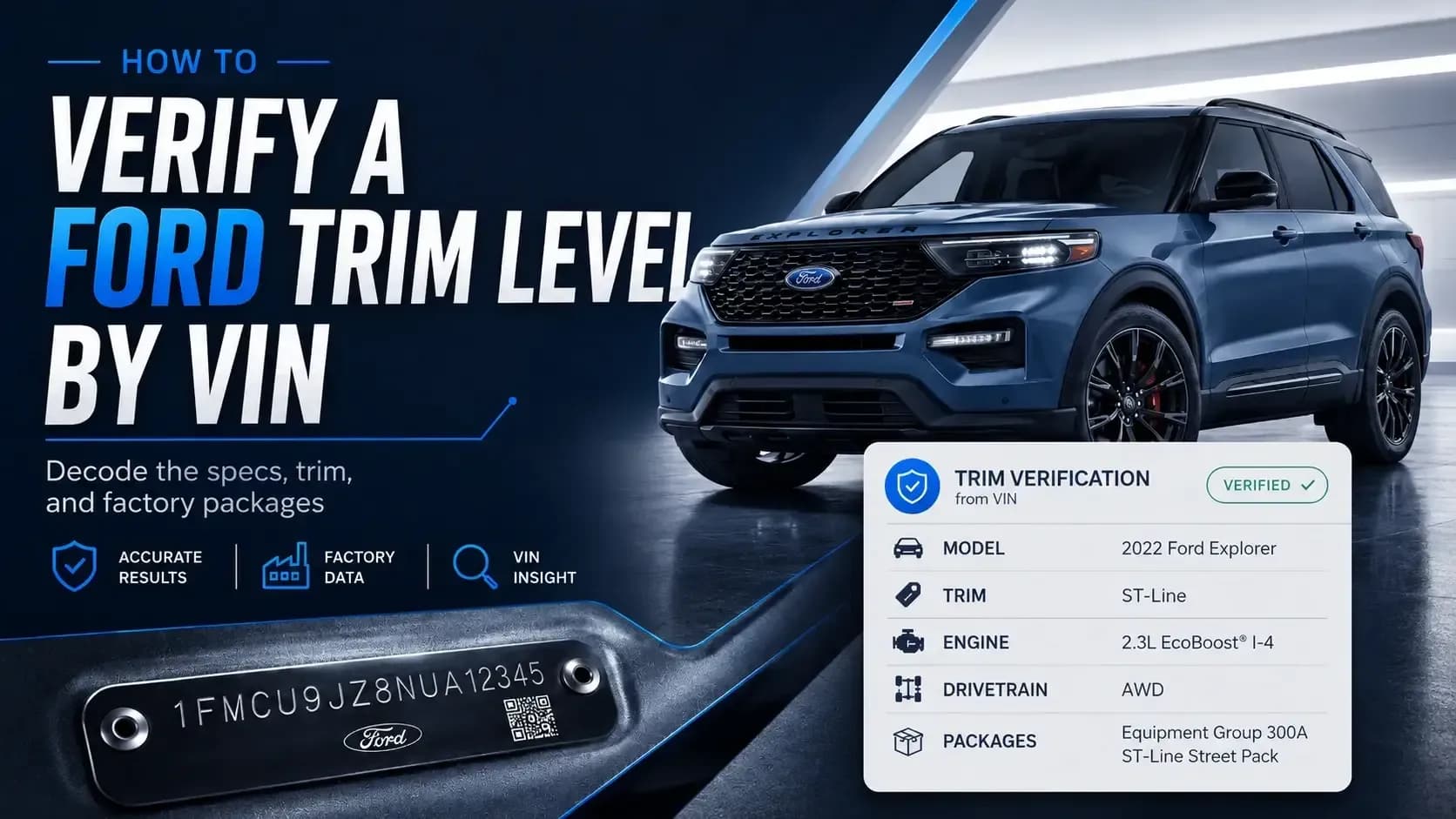
Confirm the year, model, engine, body style, drivetrain, and available trim data match the vehicle, paperwork, and seller’s advertisement.
That order keeps the research practical. Confirm the vehicle first, then purchase the record that answers your next question.
Where Each Record Has Limits?
A window sticker provides strong factory evidence, but it cannot tell you whether the vehicle was crashed, flooded, stolen, neglected, or driven hard. It also cannot prove that every original part remains installed today.
A history report has the opposite weakness. It may reveal title or accident events, yet it may not list the complete factory packages, colors, MSRP, axle configuration, or standard equipment.
Even together, the records cannot judge the vehicle’s current mechanical condition.
A clean-title Ford may still have worn suspension, rust, oil leaks, weak brakes, or a slipping transmission. Meanwhile, a vehicle with an accident record may have received careful professional repairs.
The records reduce uncertainty. They do not make the final decision for you.
A broader Ford VIN check before buying should lead naturally to a paperwork review, test drive, and independent inspection.
Do You Need Both a Window Sticker and a History Report?
For many used-car buyers, yes. The two records answer questions that do not overlap enough for one to replace the other.
The window sticker helps verify value tied to factory configuration. A towing package, premium interior, upgraded drivetrain, or expensive technology group may affect both usefulness and resale price.
The history report helps measure risk. A branded title, mileage inconsistency, lien, theft record, or heavy commercial-use pattern may change whether the vehicle is worth pursuing at all.
Imagine two identical-looking Ford F-150s. One left the factory with a valuable towing package and has a steady ownership history. The other wears similar aftermarket equipment but has accident and auction records.
A quick walk around the lot may not reveal the difference. The records can.
How Do You Use Both Before Buying?
The strongest process is short and orderly. Confirm the vehicle’s identity, review its original factory configuration, check its reported past, and inspect the physical car.
Use these four steps.
Decode the VIN
Confirm the year, model, engine, body style, drivetrain, and available trim information match the listing and vehicle.
Review the Window Sticker
Check original trim, packages, options, colors, MSRP, standard equipment, and other available factory details.
Pull the History Report
Review reported title, accident, mileage, ownership, lien, theft, auction, recall, and service records.
Inspect the Vehicle
Compare the records with the paperwork, installed equipment, seller’s explanation, test drive, and independent inspection.
For car flippers, this order can also protect the margin. A misidentified package may reduce resale value. A title issue can sink the deal entirely. Small details stop feeling small once the vehicle is yours.
Use the Right Record for the Right Question
So, which is better for buying a used car: window sticker or vehicle history? Neither wins by itself.
Choose the window sticker when you need to verify original trim, packages, factory equipment, colors, or pricing. Choose the history report when you need to review reported title, accident, mileage, ownership, lien, theft, auction, or service events.
For many used vehicles, the sensible answer is both.
The sticker shows what the vehicle was. The report shows what may have happened to it. The inspection shows what it is now.
When factory configuration is the missing piece, get the Ford window sticker by VIN and compare it with the decoded specifications, seller’s claims, and actual equipment before making an offer.
Frequently Asked Questions
What is the difference between a window sticker and a vehicle history report?
A window sticker shows original factory configuration, packages, colors, MSRP, and standard equipment. A history report may show title, accident, mileage, ownership, lien, theft, auction, recall, and service records.
Do I need both a window sticker and a vehicle history report?
Many used-car buyers benefit from both. The sticker verifies original factory details, while the history report checks reported events that occurred after the vehicle entered service.
Does a vehicle history report include the original window sticker?
Usually not as a complete original sticker. A report may include basic specifications, but it generally does not replace the detailed equipment and pricing shown on a factory window sticker.
Which should I check first when buying a used Ford?
Start by decoding the VIN. Then choose the window sticker for factory-equipment questions or the history report for title, accident, mileage, ownership, and past-record concerns.
Can a clean history report prove the vehicle was never damaged?
No. Some repairs and damage events never reach shared databases. Pair the report with a physical inspection, paint check, test drive, and mechanic’s evaluation.
Can a window sticker prove the vehicle still has every factory option?
No. It shows how the vehicle was originally equipped. Parts may have been removed, replaced, damaged, or modified during later ownership.