
A Ford window sticker can look busy at first. There are prices, codes, equipment lists, fuel numbers, warranty notes, and safety details all packed into one document. But once you know where to look, it becomes one of the easiest ways to understand how a Ford was originally built, priced, and equipped.
This guide explains how to read a car window sticker in a practical way, especially if you’re checking a used Ford before buying, selling, flipping, or comparing it with another vehicle.
If you still need the sticker first, start with a Ford window sticker by VIN lookup, then use this guide to read the result section by section.
Key Takeaways
- A Ford window sticker helps confirm original MSRP, factory equipment, packages, fuel economy, warranty, and safety details.
- The options and packages section is often the most valuable part for used Ford buyers and flippers.
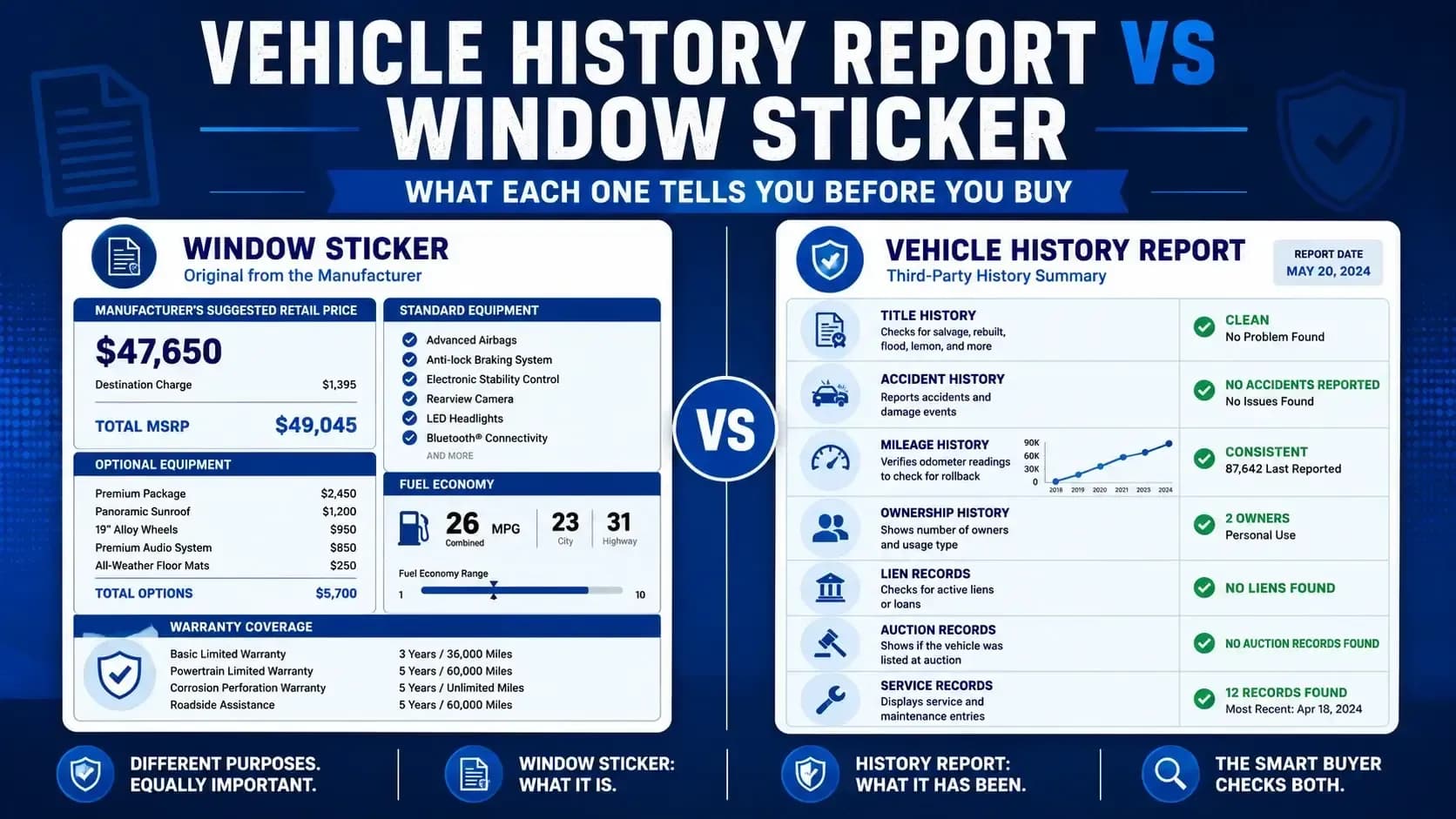
- A window sticker shows how the vehicle started, but it does not replace a history check for accidents, title records, or mileage issues.
First, What Is a Ford Window Sticker Really Telling You?
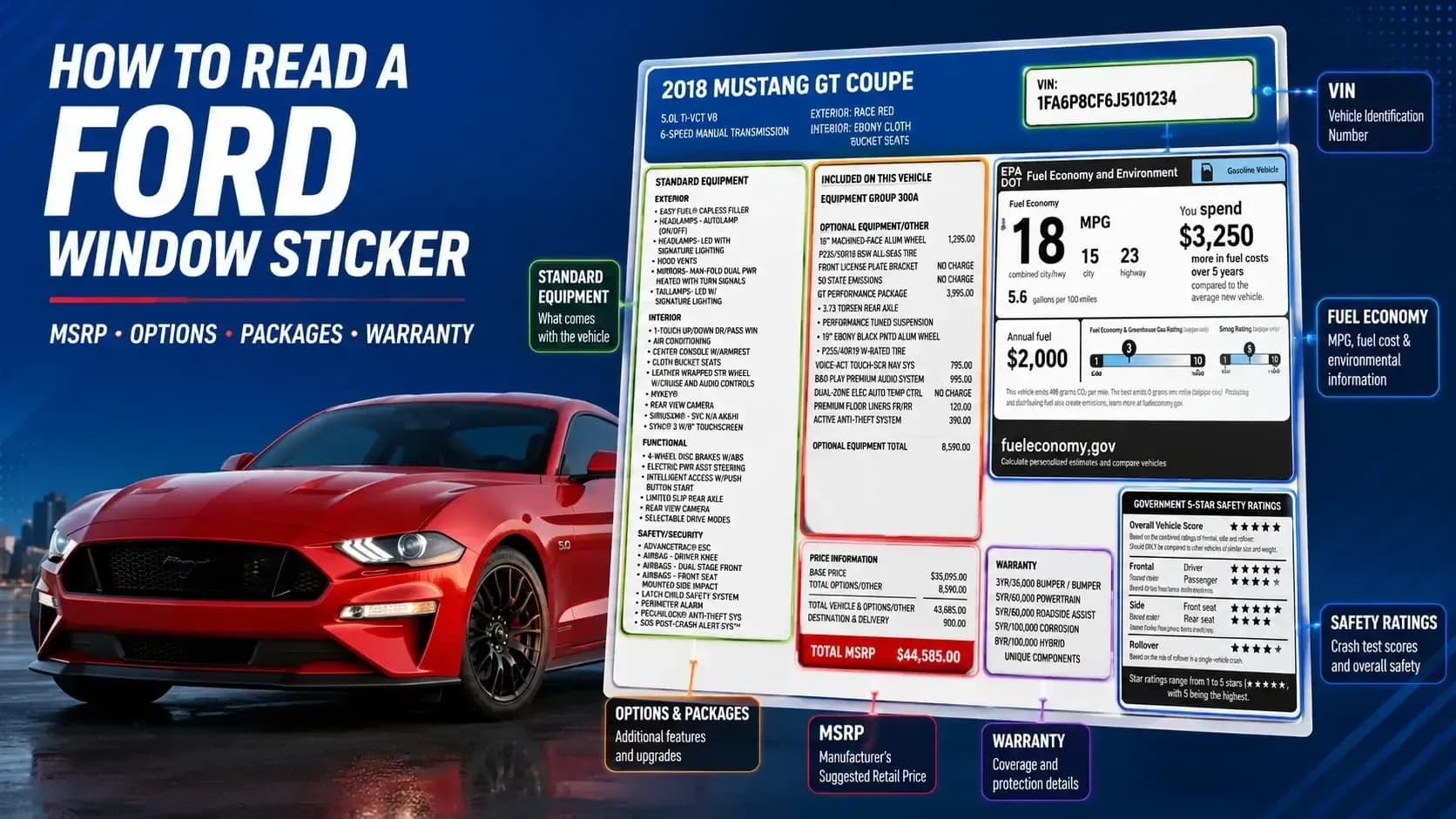
A Ford window sticker, also called a Monroney label, shows how a vehicle was presented when it was sold new. It usually includes the original MSRP, standard equipment, added factory equipment, package pricing, fuel economy, warranty information, safety ratings, and vehicle identification details.
That sounds technical, but here’s the simple version: the sticker tells you what the Ford was before owners, dealers, repairs, upgrades, and years of driving changed the story.
For used car buyers, that matters. A listing might say “loaded,” “premium,” or “rare package,” but the sticker gives you something more useful than a catchy description. It gives you a structured record of the vehicle’s original configuration.
Start With the Vehicle Identity Details
Before looking at prices or packages, check the identity section first. It works like the front page of a passport. If this part does not match the car, the rest deserves extra caution.
Here’s what to review first:
Model Year and Model
Check that the model year and model match the listing, title, registration, and seller description. A small mismatch can point to a typo, a copied listing, or a misunderstanding.
Trim Level
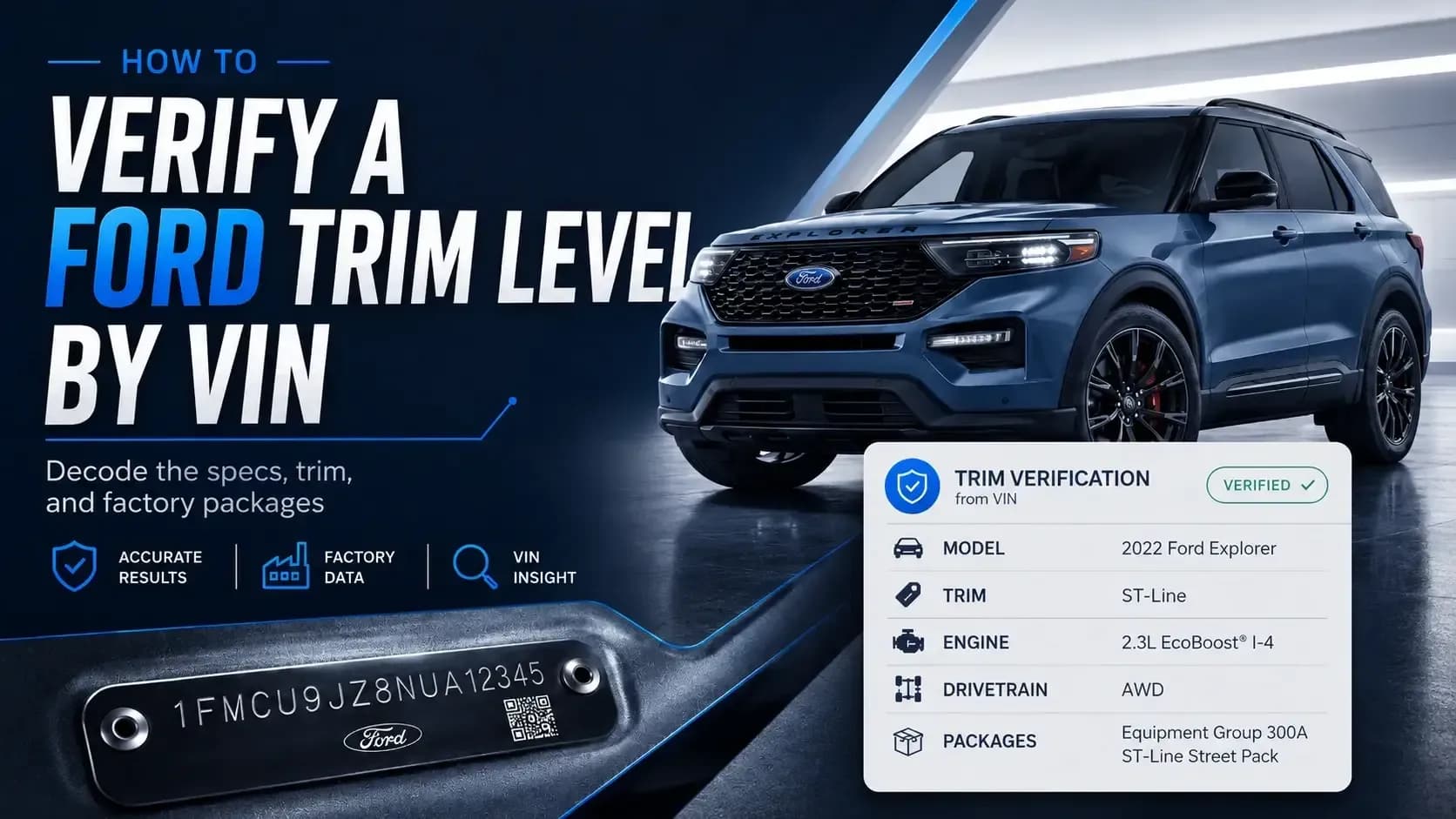
Trim matters because Ford models often have wide price and equipment gaps. An F-150 XL, XLT, Lariat, King Ranch, Platinum, and Raptor can all look related, but they do not carry the same value.
Engine and Drivetrain
Engine and drivetrain details affect performance, fuel cost, towing ability, maintenance, and buyer demand. For trucks and SUVs, this is not a small detail. It can change the whole deal.
Exterior and Interior Color
Color can influence resale value, repair work, and buyer interest. For example, a Race Red Mustang with Ebony leather bucket seats has a different appeal from a plain fleet-style configuration.
If trim accuracy is your main concern, the related guide on how to verify Ford trim level by VIN is a better next read.
Read Standard Equipment as the Baseline
Once the identity checks out, move to standard equipment. This section shows what came with the trim before extra factory packages or paid features were added.
This part can feel long, almost like reading a grocery receipt written by an engineer. Still, it helps you avoid one common mistake: treating basic trim features like rare upgrades.
Exterior Equipment
This may include bumpers, lighting, glass, mirrors, grille design, wheels, tires, and cargo access. It helps confirm what the vehicle should have had from the factory.
Interior Equipment
This can include seats, steering wheel features, cupholders, storage, lighting, infotainment items, power windows, and basic comfort features.
Mechanical Equipment
This area may show drivetrain, axle ratio, suspension, exhaust, tank size, emissions setup, steering, and other mechanical details.
Safety and Security Equipment
Look for airbags, seat belt systems, rear camera, anti-theft features, stability systems, and driver-assistance items when available.
Standard equipment is not the “wow” section. But it sets the baseline. And in used-car shopping, the baseline keeps everyone honest.
Pay Close Attention to Factory Options and Packages
Now we get to the fun part.
The factory options and packages section is often where the money hides. This is where you may find the features that separate a regular Ford from a more desirable one.
A good car window sticker breakdown should always treat this section with care because factory-installed equipment can affect resale value, buyer interest, and negotiation power.
Towing and Utility Packages
For trucks like the F-150, Ranger, Expedition, and Super Duty, towing packages can matter a lot. A factory towing package is different from someone adding a hitch later. The sticker helps you see what was included from the start.
Appearance Packages
Wheel packages, stripe packages, black accent packages, and special exterior details can make a vehicle more attractive. They may also explain why two similar Fords have different original prices.
Performance Packages
On models like Mustang, Bronco, Raptor, or ST vehicles, performance packages can include suspension, cooling, brakes, gearing, wheels, or engine-related equipment. These details matter to enthusiasts. They also matter to flippers who know what buyers search for.
Comfort and Technology Packages
Leather seating, navigation, premium audio, upgraded screens, driver-assistance tech, and interior packages can add real value. They also help explain why a used Ford may command stronger interest than a base model.
Understand MSRP, Destination Charge, and Total Price
Pricing is where many people rush, then regret it. The sticker does not tell you today’s market value, but it does explain the original price structure.
Base MSRP
Base MSRP is the starting manufacturer suggested retail price for that trim before factory options, destination charge, taxes, dealer fees, or accessories.
Added Factory Equipment
Paid options and packages increase the sticker price. A Ford with performance, towing, wheel, interior, or technology packages can sit thousands of dollars above the base trim.
Destination Charge
This is the shipping or delivery charge added to the sticker price. It is part of the original total, but it is not a feature.
Total Vehicle Price
Total price combines base MSRP, added factory equipment, packages, and destination charge. It helps you understand what the Ford cost when new, but it is not the same as the current used-car price.
For example, a 2018 Ford Mustang sticker may show a base MSRP of $25,680, then climb to a total vehicle price of $33,770 after factory options, packages, and shipping. That gap tells a story. It shows why one Mustang may be worth more than another that looks similar at first glance.
Don’t Skip Fuel Economy, Warranty, and Safety
After pricing, most people’s eyes jump away from the sticker. Fair enough. Fuel economy tables and warranty blocks are not exactly thrilling.
Still, these sections help you think like an owner, not just a buyer.
Fuel Economy
Fuel economy shows expected city, highway, and combined mileage. For a daily driver, this affects monthly cost more than people like to admit.
Warranty Information
Warranty details show the original coverage terms, such as basic, powertrain, corrosion, or roadside assistance coverage. Just remember, original warranty terms are not the same as current warranty status.
Safety Ratings
Safety ratings help compare vehicles of similar size and class. A blank or limited section does not automatically mean the vehicle is unsafe. It may mean the rating was not listed or available for that exact configuration.
Ownership Cost Clues
Fuel cost, warranty coverage, and safety information help you think past the sale price. A cheap vehicle that costs more to fuel, insure, or repair may not feel cheap for long.
For example, a 2018 Ford Mustang sticker may show a base MSRP of $25,680, then climb to a total vehicle price of $33,770 after factory options, packages, and shipping. That gap tells a story. It shows why one Mustang may be worth more than another that looks similar at first glance.
Separate Factory Equipment From Dealer Add-Ons
This is one of those small details that can save you from a messy conversation later.
A window sticker mainly shows factory information. Dealer add-ons, accessories, tint, protection packages, service plans, market adjustments, and local fees may be separate.
Factory Equipment
Factory equipment is tied to the vehicle’s original configuration. It is usually the most reliable section for confirming original options and packages.
Dealer Add-Ons
Dealer add-ons may have been installed or sold after the vehicle arrived at the dealership. Some are useful. Some mostly affect the sales price.
Aftermarket Changes
Lift kits, wheels, exhaust systems, custom lights, tunes, wraps, and interior changes may not appear on the original sticker. That does not make them bad, but they are not factory sticker proof.
Pricing Confusion
A seller may include aftermarket upgrades in the asking price. The sticker helps separate original factory value from later changes.
How to Read a Car Window Sticker Step by Step?
If the sticker feels overwhelming, follow a simple reading order. This is the easiest way to answer How to read a car window sticker step by step without getting buried in small print.
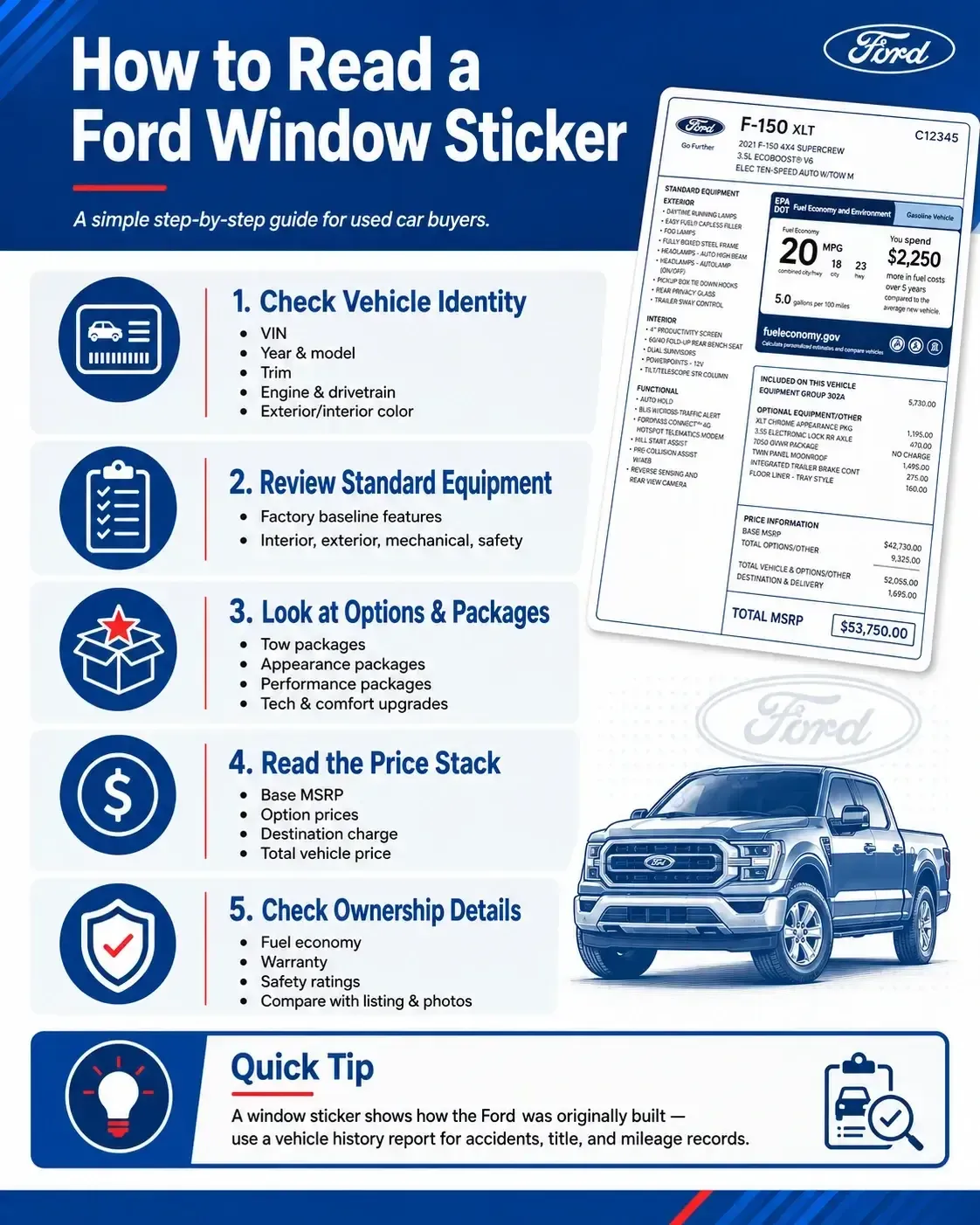
Confirm the Vehicle Identity
Check VIN, model year, model, trim, engine, drivetrain, exterior color, and interior color first.
Review the Standard Equipment
Use this section to understand what came with the trim before extra packages were added.
Study the Factory Options
Look for paid equipment, packages, and features that may affect value, capability, comfort, or buyer demand.
Price Stack Comparison
Compare base MSRP, factory options price, destination fee, and total price of the car.
Ownership Information
Examine information on fuel economy, warranty details, safety information, and other comments that help determine what it is really like to own this car.
Comparing the Sticker With the Car
The purpose of comparing the sticker with the car is to detect any inconsistencies. The aim here is not to remember all the information from the sticker.
How to Read a Window Sticker on a Used Car?
Reading a sticker for a used Ford is different from reading one on a new vehicle. You are not just learning features. You are testing a story.
This is where how to read a window sticker on a used car becomes practical.
1. Compare It With the Listing
Check whether the seller’s trim, package, engine, and feature claims match the sticker.
2. Compare It With the Photos
Look for visible clues such as seats, wheels, infotainment screen, roof type, tow equipment, badging, and interior trim.
3. Compare It With the Vehicle Condition
The sticker shows original equipment. It does not show wear, repairs, rust, accidents, or missing parts.
4. Compare It With Vehicle Records
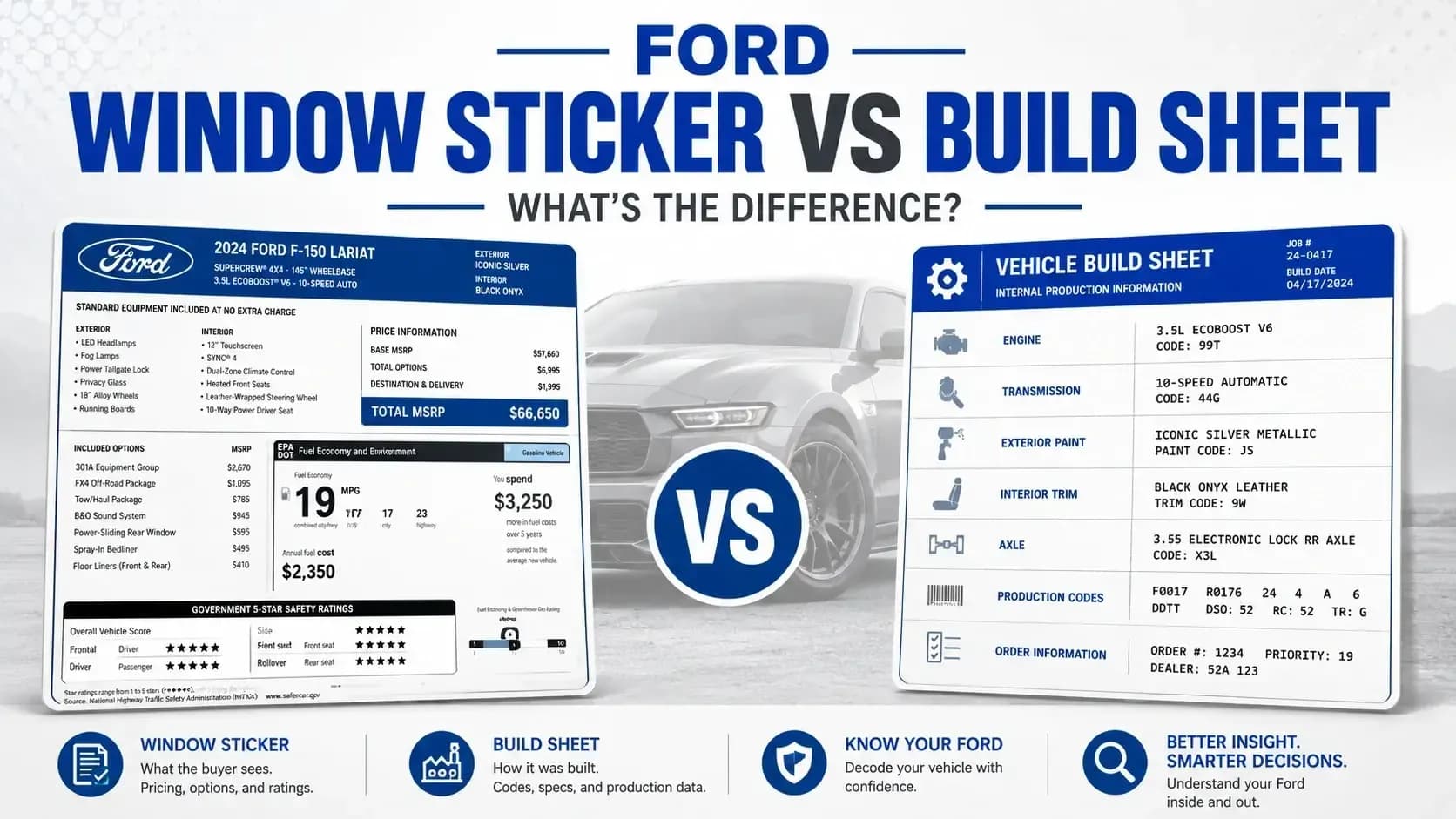
A sticker shows how the Ford was built. A history report shows what may have happened later. Those are different jobs, and both can matter before money changes hands.
What If the Ford Window Sticker Is Missing?
Sometimes the sticker is not available right away. That does not always mean something is wrong, but it does mean you should slow down and verify through other records.
Here are the common reasons:
⚠️ The VIN Was Entered Incorrectly
Modern VINs use 17 characters and do not include I, O, or Q. One wrong character can block the lookup.
⚠️ The Vehicle Is Older
Older Ford vehicles may have limited sticker availability. Some classic models need door tags, data plates, paint codes, trim codes, or build records.
⚠️ The Record Is Limited
Not every VIN returns the same level of detail. Availability can depend on model year, data source, and record coverage.
⚠️ The Vehicle Needs Classic Research
For older models, a classic Ford VIN check can help explain shorter VINs, door tags, build records, and factory identification details.
Final Thoughts: Read the Sticker Before You Trust the Story
A Ford window sticker will not tell you everything. It will not show every accident, owner, repair, or title issue. That is not its job.
Its job is simpler and still very important: it shows how the vehicle was originally configured.
Once you understand how to read a car window sticker, you can check the parts that matter most: trim, MSRP, standard equipment, factory options, packages, fuel economy, warranty, and safety details.
For used buyers, it adds confidence. For sellers, it adds proof. For flippers, it adds context. And for enthusiasts, it adds the little details that make a vehicle feel less like a listing and more like a specific build.
Need the sticker for your own Ford? Use the Ford window sticker lookup to check available factory details, then read each section with this guide beside you.
Frequently Asked Questions
What does a Ford window sticker show?
A Ford window sticker may show the vehicle description, VIN, model year, trim, standard equipment, factory options, packages, original MSRP, destination charge, fuel economy, warranty details, and safety ratings.
Is a Ford window sticker the same as a Monroney label?
Yes. A Monroney label is the official window sticker placed on a new vehicle for retail sale. It shows important factory and pricing details for that specific vehicle.
Does a window sticker show factory options?
Yes, the sticker may show factory-installed options and packages when available. This is useful when checking features such as towing packages, appearance packages, upgraded wheels, navigation, leather seats, or performance equipment.
Is the MSRP on a window sticker the current value?
No. MSRP shows the manufacturer’s suggested retail price when the vehicle was new. Current value depends on mileage, condition, location, demand, ownership history, and market pricing.
Can a window sticker prove a Ford trim level?
It can help verify the original trim and configuration tied to the VIN. If the listing says one trim but the sticker shows another, ask questions before moving forward.
Does a window sticker show accidents or title problems?
No. A window sticker shows original factory and retail details. Accident records, title brands, odometer records, liens, ownership history, and auction records belong in a vehicle history report.
Why can’t I find my Ford window sticker?
The VIN may be entered incorrectly, the vehicle may be older, the record may be limited, or the sticker may not be available from the current data source. Check the VIN carefully and use other records when needed.
What is the most important part of a Ford window sticker?
For many used buyers, the most important parts are trim, original MSRP, factory options, and packages. These details help confirm whether the vehicle matches the seller’s claims.