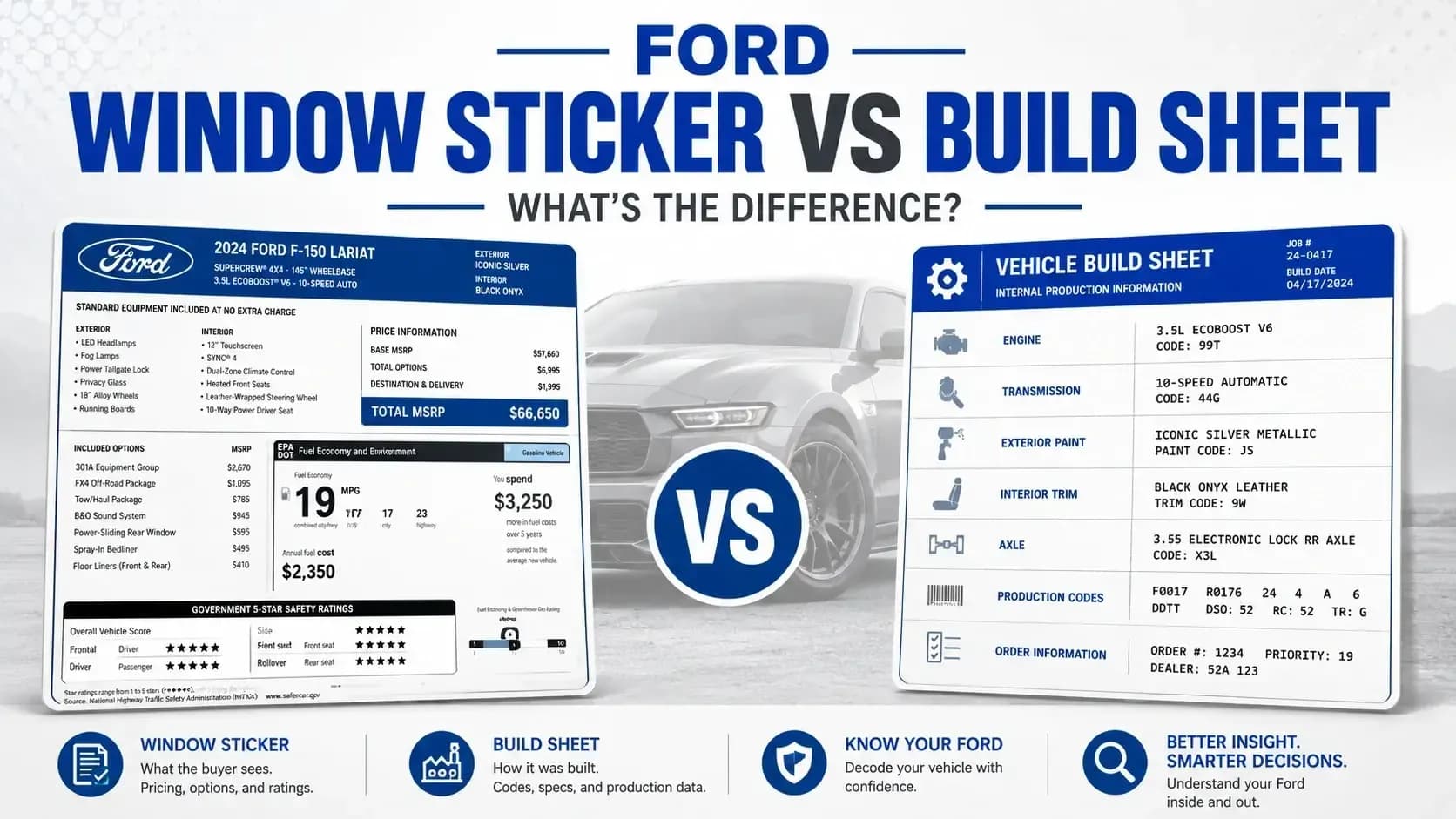
While a Ford window sticker and a build sheet are both capable of providing information about the initial manufacturing of your vehicle, there are certain differences between these two documents. The window sticker is more targeted at buyers of the car. It contains information about MSRP, factory options, packages, warranty, gas mileage, and safety.
Therefore, the answer to the question "window sticker vs build sheet" is quite simple: for figuring out how the car was sold, use the window sticker; for finding out how the car was manufactured, use the build sheet.
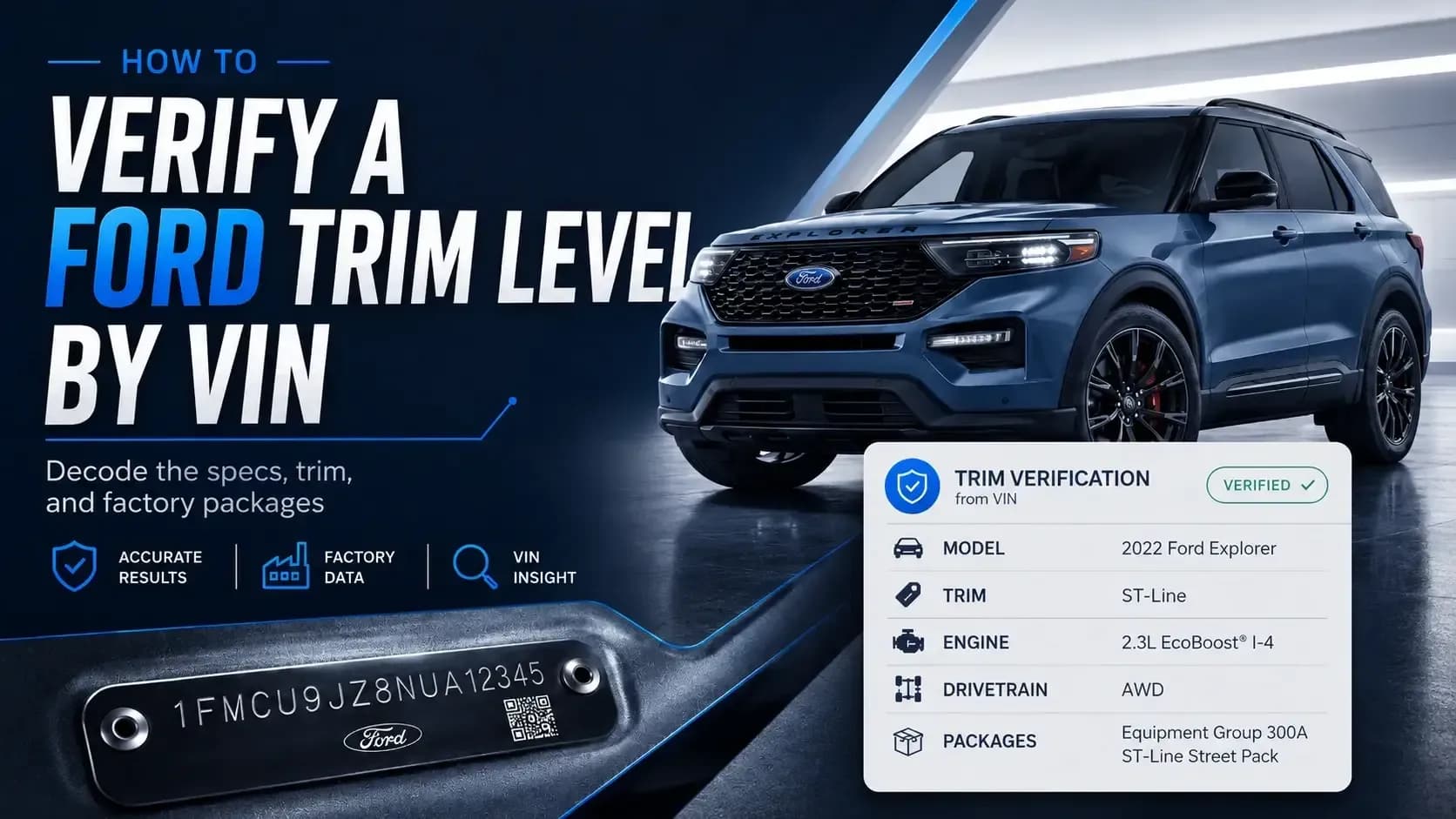
When examining the used Ford, you should begin from the Ford window sticker by VIN lookup to check available sticker info.
Key Takeaways
- A window sticker is best for MSRP, factory options, packages, fuel economy, warranty, and retail details.
- A build sheet is best for factory build data, codes, original configuration, and restoration research.
- Used Ford buyers may need both documents, especially when checking value, originality, or seller claims.
The Window Sticker Is the Retail Story
Before we compare both documents, it helps to understand the window sticker first. It is the document most buyers are used to seeing on a new vehicle at a dealership.
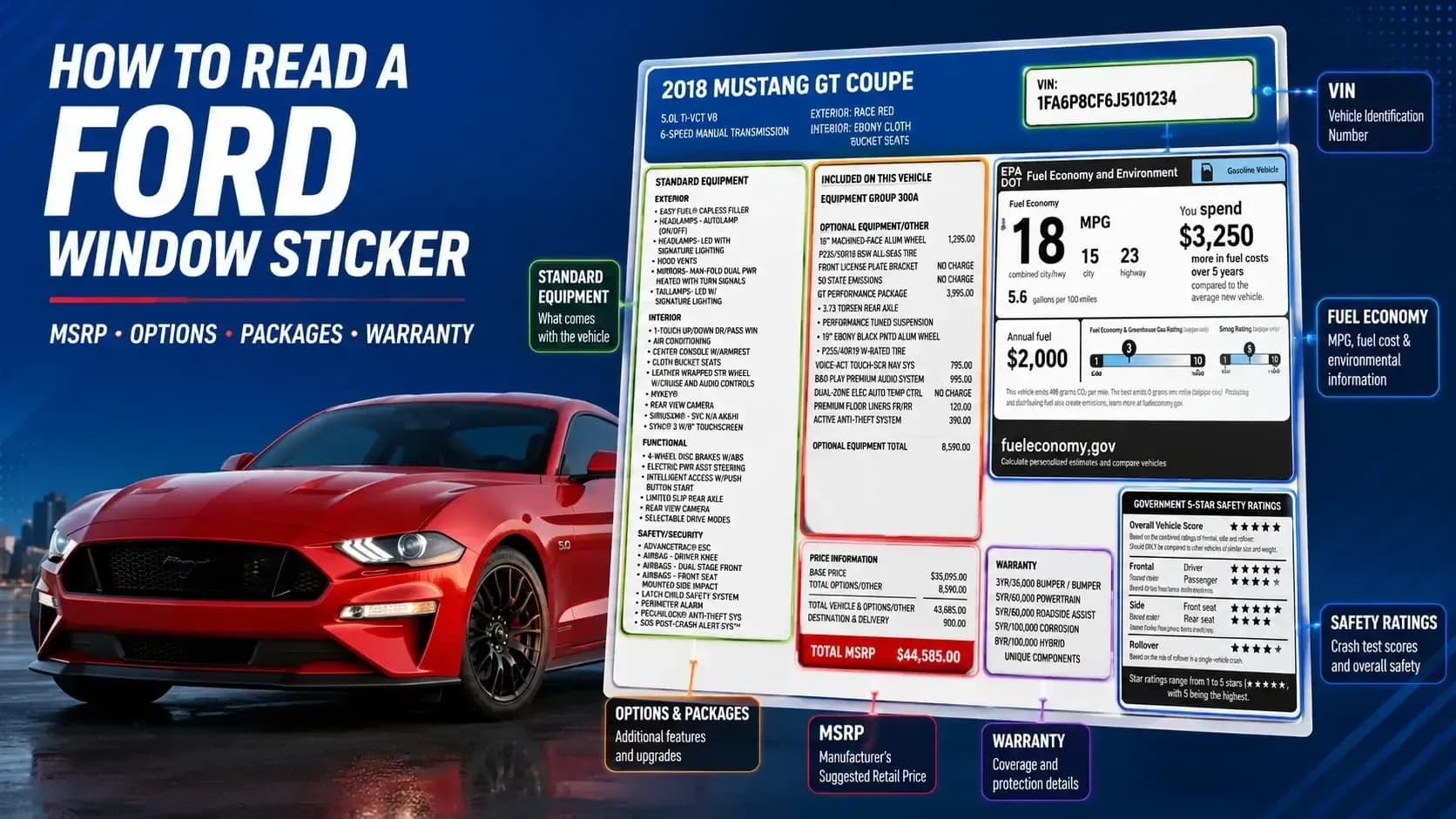
A Ford window sticker, also known as an original Monroney sticker, shows the vehicle’s retail information when it was new. Think of it like the public-facing menu at a restaurant. It does not show every kitchen note, but it tells the customer what they are getting and how much it costs.
Here’s what a Ford window sticker may show:
Vehicle Identity
This includes the VIN, model year, model, trim, body style, engine, drivetrain, exterior color, and interior color. It helps confirm that the vehicle matches the listing.
Standard Equipment
This section shows what came with the trim before paid upgrades were added. It may include interior, exterior, mechanical, safety, and comfort features.
Optional Equipment and Packages
This is where value often hides. A towing package, wheel package, performance package, technology group, leather seating, or navigation system can change how desirable a Ford is.
Price and Ownership Details
A sticker may show base MSRP, option prices, destination charge, total vehicle price, fuel economy, warranty, and safety ratings.
That is why a car window sticker is not just a basic question. For used buyers, it can help separate real factory equipment from seller guesswork.
The Build Sheet Is the Factory Story
Now let’s move behind the curtain a little.
A build sheet is more internal and production-focused. It is tied to how the vehicle was assembled or configured at the factory. For modern vehicles, build data may help confirm factory specs and options. For older Fords, build sheets, data plates, door tags, and related records can be especially useful for restoration and authenticity checks.
Here’s what is a build sheet for a car in plain language: it is a record that helps explain how the vehicle was built, not how it was advertised for sale.
A Ford build sheet may help with these details:
Original Build Configuration
It may support information about engine, transmission, drivetrain, axle, paint, trim, body style, and other factory details.
Production and Equipment Codes
Build records may include codes that matter more to restorers, collectors, and serious Ford enthusiasts than casual buyers.
Restoration Support
If someone is restoring a classic Ford, a build sheet or factory record can help confirm whether the current parts match the original build.
Originality Checks
For collectible or older models, originality matters. A build sheet may help verify whether the vehicle still matches its factory identity.
A window sticker feels like a sales document. A build sheet feels more like a factory note. Both can be useful, but they answer different questions.
Difference Between Window Sticker and Build Sheet
Here’s the thing: people often compare these two as if one should replace the other. That is not really how it works.
The difference between window sticker and build sheet comes down to purpose. One is made for retail clarity. The other supports production and build verification.
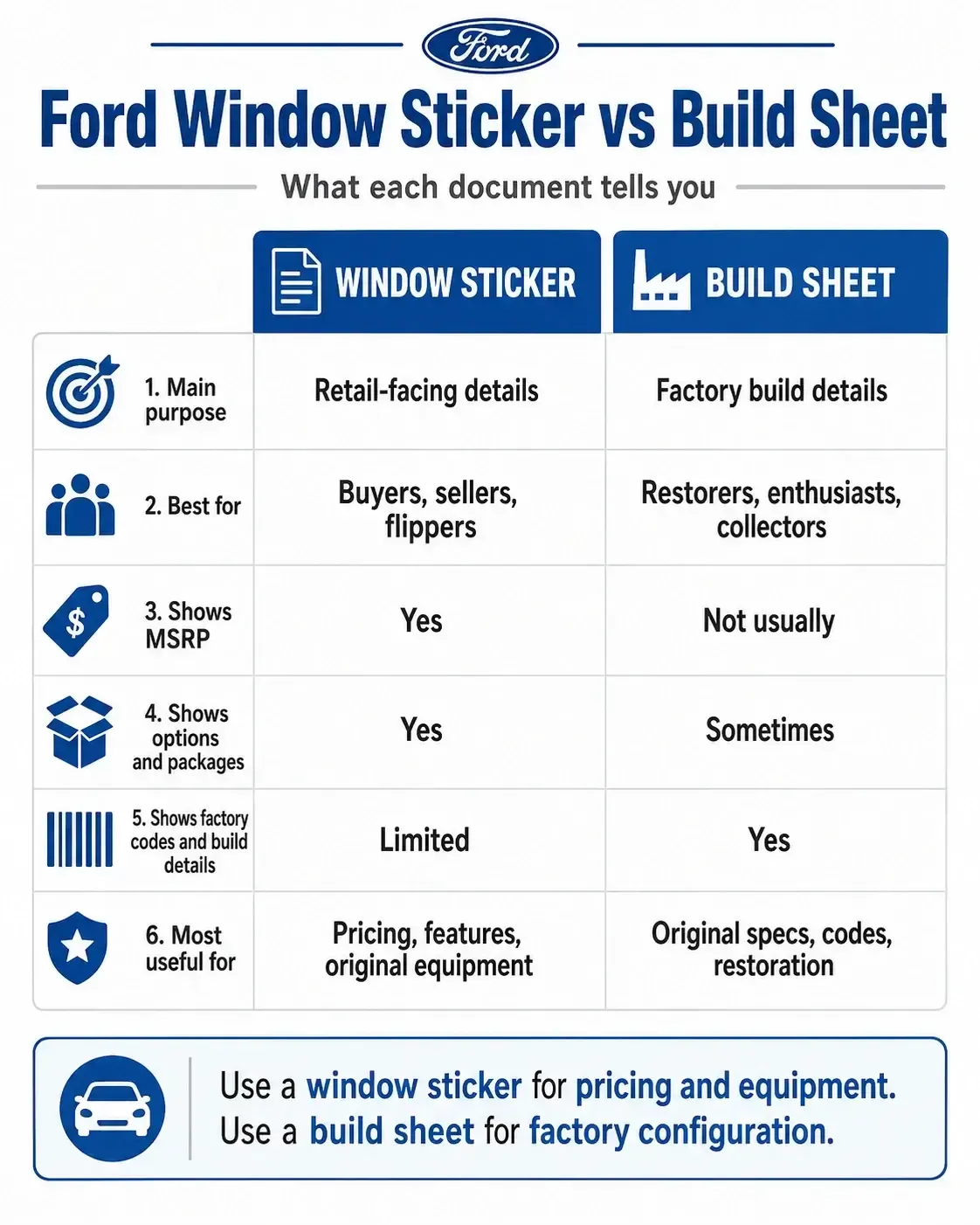
| Comparison Point | Ford Window Sticker | Ford Build Sheet |
|---|---|---|
| Main Purpose | Shows how the vehicle was sold new | Shows how the vehicle was built or configured |
| Best For | MSRP, packages, options, warranty, fuel economy | Factory specs, codes, trim, paint, production details |
| Buyer Use | Helps compare price and equipment | Helps verify originality and factory build details |
| Common Audience | Used buyers, sellers, dealers, flippers | Restorers, collectors, enthusiasts, serious buyers |
| Pricing Details | Usually includes MSRP and option prices | May not focus on retail pricing |
| Classic Vehicle Value | Helpful if available | Often more useful for authenticity research |
← Scroll horizontally to see more →
This is the easiest way to understand the Difference Between Window Sticker and Build Sheet: the sticker explains the retail package, while the build sheet supports the factory blueprint.
When a Window Sticker Helps More
A window sticker is usually the better document when you are shopping, selling, pricing, or comparing a used Ford. It translates the original build into buyer-friendly details.
If you are reading one for the first time, this guide on how to read a Ford window sticker can help you understand each section without getting buried in small print.
Use the window sticker when you need these answers:
What Was the Original MSRP?
The sticker can show the base MSRP, option prices, destination charge, and total vehicle price when the Ford was new.
Which Packages Were Factory-Installed?
This matters for trucks, SUVs, and performance models. A factory towing package or performance package can carry more weight than an aftermarket add-on.
What Features Came Standard?
Standard equipment helps you avoid overvaluing basic trim features. A seller may call something “loaded,” but the sticker gives you context.
What Ownership Details Were Listed?
Fuel economy, warranty terms, and safety ratings help buyers understand the vehicle beyond looks and horsepower.
For used car flippers, this is gold. Not flashy gold, but the kind that helps write a stronger listing and defend the asking price.
When a Build Sheet Helps More
A build sheet becomes more valuable when you care about factory accuracy. This is especially true for classic Fords, rare trims, restorations, and vehicles with unclear equipment history.
Use a build sheet when you need these answers:
What Was the Factory Build?
A build sheet can help confirm engine, transmission, axle, paint, trim, and other original configuration details.
Are the Current Parts Correct?
For a restoration, this matters. A Mustang, Bronco, F-Series, or Thunderbird may have changed a lot over time. The build sheet helps compare the current vehicle with its original setup.
Do the Codes Match?
Trim codes, paint codes, axle codes, and production details can help verify whether the story matches the vehicle.
Is It Useful for Classic Ford Research?
Yes. Older Fords may not always have a modern-style window sticker available, so build records, door tags, data plates, and VIN details can become more important.
For older models, the guide on classic Ford VIN check connects well with build sheet research.
Is a Build Sheet the Same as a Window Sticker?
No, a build sheet is not the same as a window sticker. They may share some information, but they are created for different reasons.
A window sticker is meant to be read by buyers. It explains the vehicle in a clean, retail-friendly way. A build sheet is more technical. It supports factory configuration, codes, and production details.
Here’s a simple way to picture it:
The Window Sticker Is the Showroom Card
It tells buyers what the Ford includes, what it costs, and what major features or ratings came with it.
The Build Sheet Is the Factory Note
It helps explain how the vehicle was assembled or configured before it reached the sales floor.
The Two Can Support Each Other
If both documents line up, that adds confidence. If they do not, you may need to ask more questions.
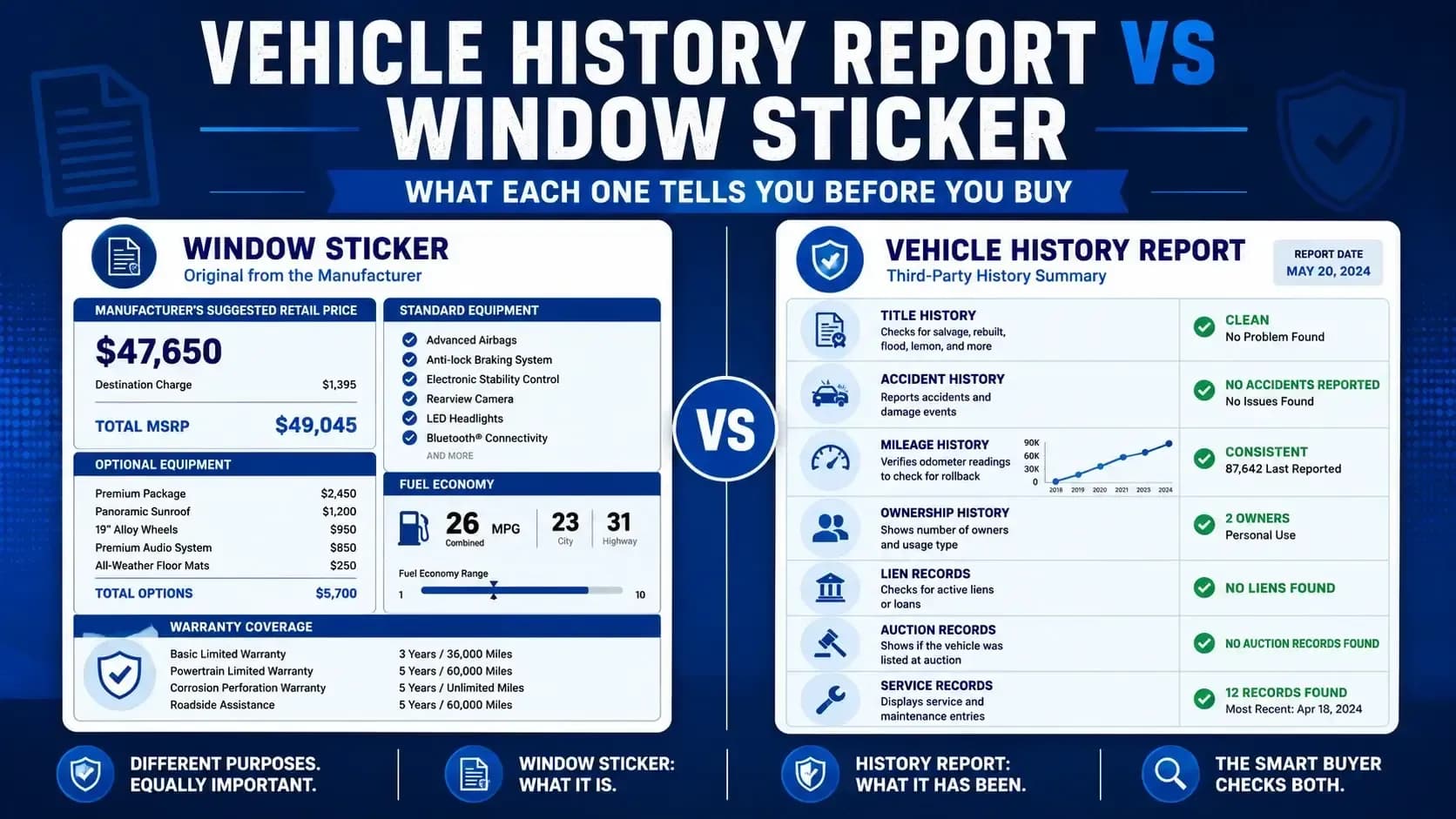
Neither Replaces a Vehicle History Report
This part is important. A window sticker and build sheet show original information. They do not prove whether the vehicle later had an accident, title issue, mileage concern, lien, theft record, or auction event.
How Used Ford Buyers Can Use Both?
If you are buying a used Ford, you do not need to turn into a paperwork detective. But a little checking goes a long way.
Use both documents in a practical order:
Start With the Window Sticker
Check the model, trim, MSRP, standard equipment, factory options, packages, fuel economy, warranty, and safety details.
Compare It With the Listing
If the seller claims premium packages or rare equipment, see whether the sticker supports that claim.
Use the Build Sheet for Deeper Specs
If you need paint, trim, engine, axle, transmission, or classic build details, a build sheet may give better support.
Match Documents With the Vehicle
Look at the actual Ford. Do the wheels, seats, equipment, trim, and badges make sense compared with the records?
Check History Separately
Use history records to check what happened after the vehicle was sold new.
Ask Better Seller Questions
When the documents give you details, you can ask sharper questions. That alone can save you from a bad deal.
This is not about being difficult. It is about buying with your eyes open.
Common Mistakes People Make With These Documents
Even good buyers can misread these records. It happens. A sticker looks official, a build sheet looks technical, and suddenly people assume every question is answered.
Before you rely on either document, avoid these mistakes:
⚠️ Treating MSRP as Current Value
MSRP is the original suggested price, not the used-car value today. Current value depends on mileage, condition, location, demand, history, and market timing.
⚠️ Confusing Factory Options With Dealer Add-Ons
A factory package on a window sticker is not the same as tint, accessories, wheels, or upgrades added later.
⚠️ Assuming Missing Data Means Bad News
Some records may be limited by model year, vehicle type, or data availability. Missing details do not always mean the vehicle has a problem.
⚠️ Ignoring the Physical Inspection
Documents help, but they do not replace your eyes, your test drive, or a mechanic’s inspection.
Final Thoughts: Use the Right Document for the Right Question
The window sticker vs build sheet question is not about choosing one forever. It is about knowing which document answers which question.
If you want MSRP, packages, fuel economy, warranty, safety ratings, and retail equipment details, use the window sticker. If you want factory build data, codes, paint, trim, engine, transmission, or classic restoration support, use the build sheet.
The smarter move? Use both when the vehicle matters enough.
A used Ford has two stories: how it was built and how it was sold. Those stories can help you judge the third story — the one the seller is telling you now.
Need the factory build side of the puzzle? Check available details with a Ford build sheet by VIN before you buy, sell, restore, or document your Ford.
Frequently Asked Questions
What is the difference between window sticker and build sheet?
Window sticker provides information related to retail features like MSRP, package, standard features, fuel economy, warranty, and safety rating. Build sheet concentrates more on build data, codes, original configuration, and production information.
Are window sticker and build sheet the same thing?
Not really. Window sticker and build sheet are not the same. There might be certain similarities between both sheets but still there will be differences based on their use.
What is window sticker of a car for?
Window sticker of a car is useful for buyers for checking original MSRP, trim, factory options, packages, warranty information, fuel economy, safety rating, and standard features.
What is build sheet of a car for?
Build sheet of a car is useful for checking factory specifications, paint, trim, engine, transmission, axle, factory options, and production data.
Which is better for buying a used Ford?
A window sticker is usually more helpful for general used-car buying because it explains price, options, and equipment clearly. A build sheet is better when you need deeper factory or classic vehicle details.
Does a window sticker show accident history?
No. A window sticker shows original vehicle and retail details. It does not show accident history, title brands, mileage problems, liens, ownership records, or auction events.
Does a build sheet show MSRP?
Not always. A build sheet is more focused on factory build information. For MSRP and retail package details, a window sticker is usually the better document.
Should I check both before buying a used Ford?
Yes, especially if the Ford is expensive, rare, modified, classic, or being bought for resale. The window sticker helps with value and equipment, while the build sheet helps with factory accuracy.