
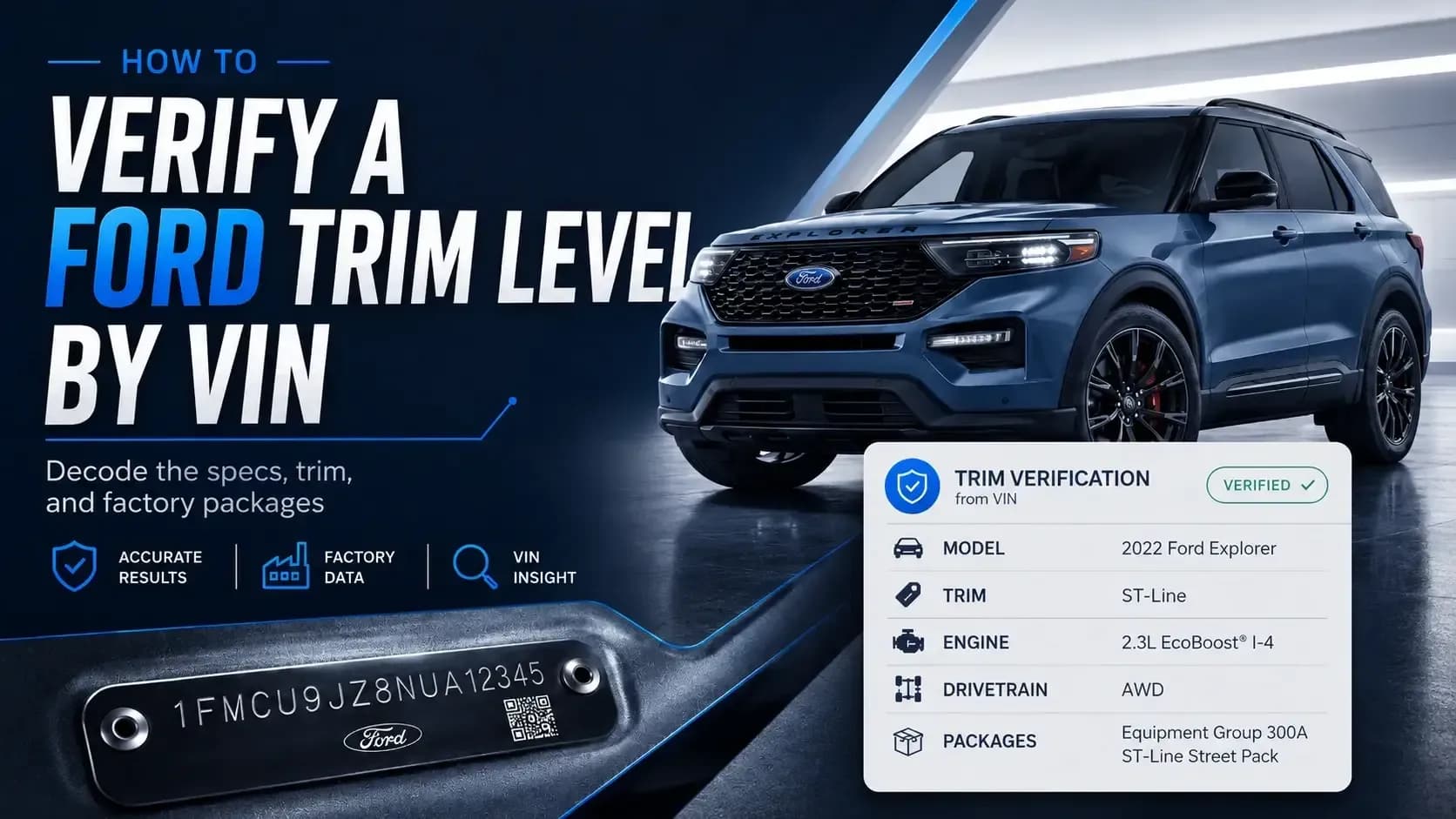
You can verify a Ford trim by VIN by decoding the 17-digit number, comparing the returned specifications with the vehicle, and checking the original window sticker for factory trim, packages, and equipment.
Start with the free Ford VIN decoder. It can show available details such as year, model, engine, body style, drivetrain, and trim or series. Once the Ford matches those basics, the paid window sticker provides stronger evidence of how it was equipped when new.
That matters because badges are cheap. Factory proof is not.
Key Takeaways
- A VIN decoder confirms the Ford’s basic identity and available trim information.
- A window sticker is better for checking factory packages, equipment, and original pricing.
- The door label supports identification, but it may not display the complete marketing trim name.
Trim, Package, and Option Are Not the Same Thing
Used-car listings often mix these terms together. A seller may call an equipment package a trim or describe several added features as proof of a higher series.
A trim level is the vehicle’s main factory version. A package adds a group of related features to that trim. An option is usually one individual factory-selected upgrade.
| Term | What It Means | Simple Example |
|---|---|---|
| Trim level | The vehicle’s main factory series | XLT instead of XL |
| Package | A group of added features | Tow or technology package |
| Option | One selected factory feature | Premium paint or upgraded wheels |
← Scroll horizontally to see more →
The names and included equipment can change by model year. An Explorer trim from one year may not have the same standard features in another.
That is why the trim name alone is not enough. Check the model year, decoded specifications, factory packages, and actual equipment together.
Why Can Badges and Seller Listings Be Misleading?
A grille emblem or tailgate badge is helpful for a quick glance, but it is not a permanent identity record. Four common issues can make a visible trim claim unreliable.
⚠️ Added or Replaced Badges
Trim badges can be installed within minutes, so an XLT, Lariat, ST, or Platinum emblem does not prove factory origin.
⚠️ Packages That Resemble Higher Trims
Appearance and technology packages may add wheels, lighting, upholstery, or screens that make a lower trim look more expensive.
⚠️ Body Repairs and Swapped Panels
Collision repairs may replace doors, tailgates, grilles, or interior pieces with parts taken from another trim level.
⚠️ Reused or Incorrect Listing Data
Dealers and marketplaces may copy old descriptions, decode the wrong VIN, or select a nearby trim from a listing menu.
None of these issues automatically means the seller is dishonest. Still, they give you a good reason to trust factory records rather than eyesight alone.
How Do You Check a Ford Trim Level Using the VIN?
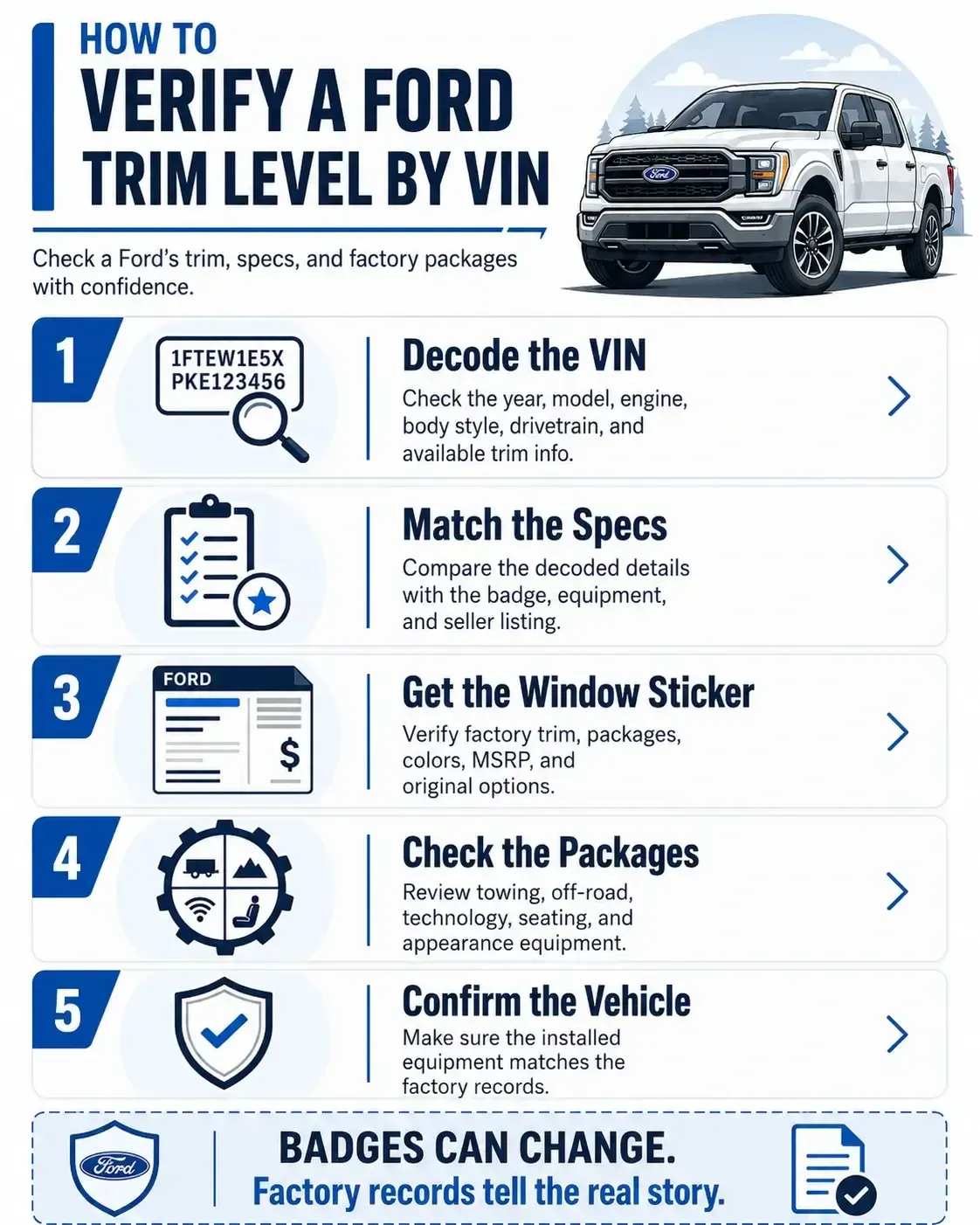
The cleanest process starts with the free decoded specifications. You can then move to the paid factory sticker when you need stronger proof of the original trim or packages.
Find the 17-Digit VIN
Copy the VIN from the driver-side windshield, door jamb, title, registration, or seller paperwork.
Decode the Basic Specifications
Check the available year, model, engine, body style, drivetrain, and trim or series information.
Compare the Ford With the Result
Match the decoded specs with the vehicle, listing photos, dashboard controls, seats, wheels, and exterior equipment.
Get the Original Window Sticker
Use the paid sticker to verify factory trim, standard equipment, packages, colors, MSRP, and individual options.
Check Every Claimed Package
Compare towing, off-road, appearance, technology, seating, wheel, and safety packages with the sticker details.
Inspect the Physical Equipment
Confirm that the equipment listed in the records is still present and correctly installed on the Ford.
You do not need every available report merely to confirm a trim. Start with the free identity data. If the seller claims a premium series or valuable package, use the factory sticker to settle the question.
Which Record Gives the Strongest Trim Evidence?
Not every record carries the same weight. Some identify the vehicle, while others explain its factory equipment or what happened later.
| Record | Best Use for Trim Verification |
|---|---|
| VIN decoder | Confirms available year, model, engine, body, drivetrain, and trim data |
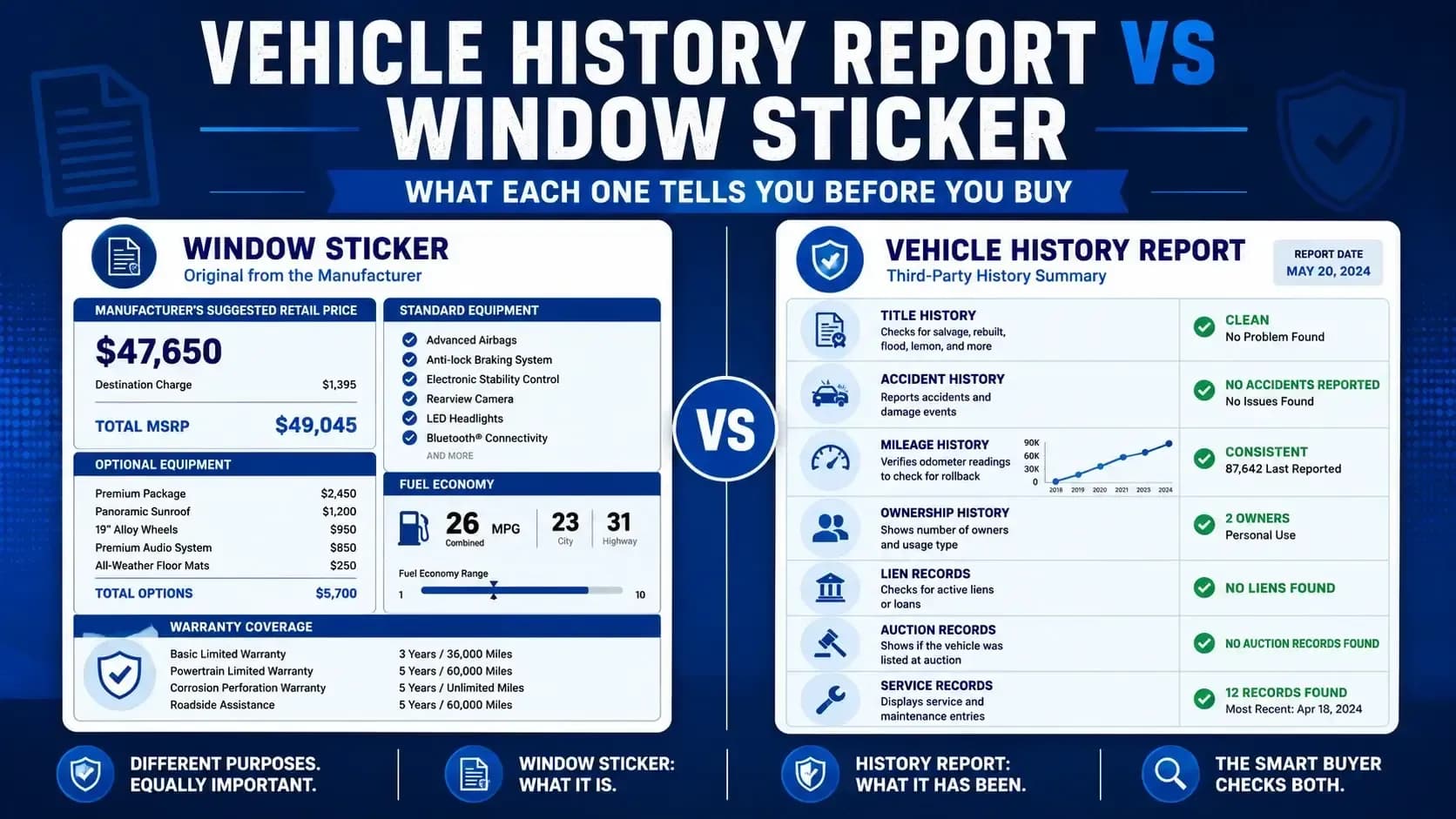
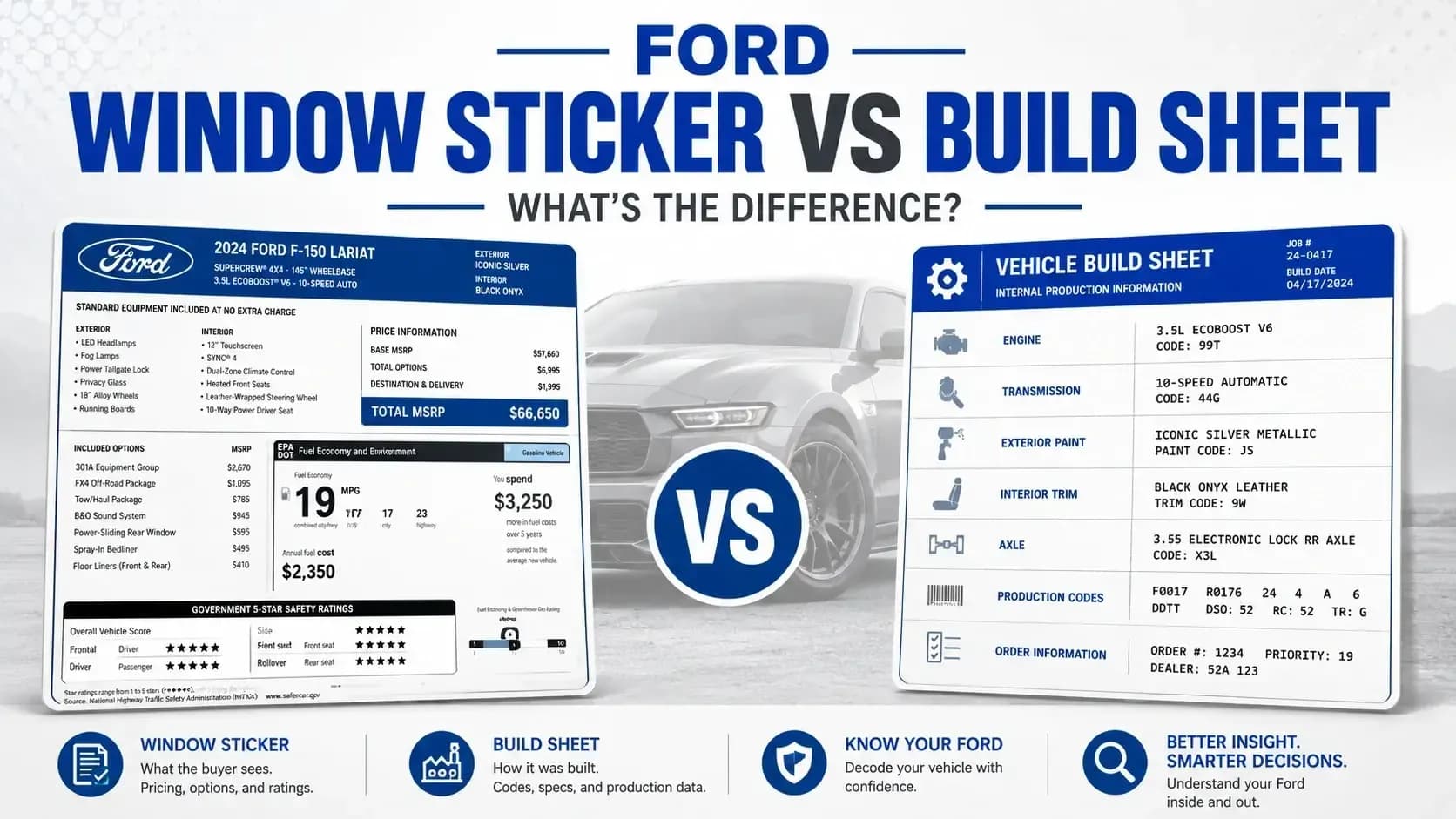
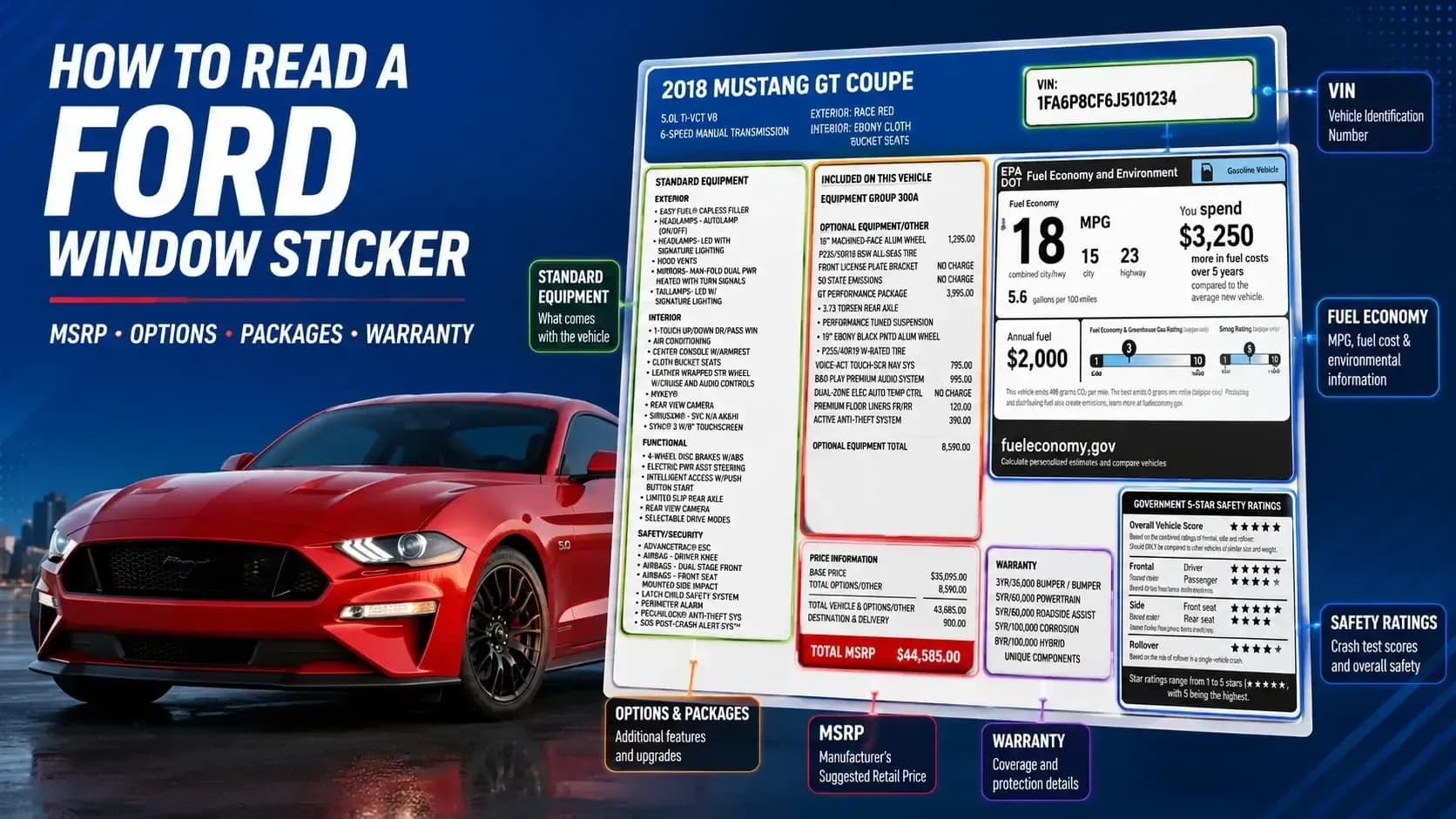
| Window sticker | Shows model information, equipment, packages, colors, options, and pricing |
| Door jamb label | Supports VIN, paint, interior trim, transmission, axle, wheelbase, and build data |
| Build sheet | Adds factory codes, production details, and a fuller options list when available |
| Vehicle history report | Helps explain title, accident, mileage, auction, or rebuild concerns |
← Scroll horizontally to see more →
Ford lists the window sticker as a source for model information, standard equipment, optional equipment, pricing, colors, engine details, and transmission specifications. Its door jamb label may show the VIN, exterior paint, interior trim, transmission, axle, wheelbase, tires, and build information.
That makes the window sticker the most useful buyer-facing document for checking trim and packages. The door label supports the research, but it is not always a plain-English trim certificate.
For help interpreting each section, see how to read a Ford window sticker.
Model-Specific Trim Checks Need One Extra Look
Ford trim names and standard equipment can change between model years. The same badge may appear on vehicles with different engines, displays, seats, safety systems, or exterior details.
Take a Ford Explorer VIN decoder trim level result as an example. The decoder may identify the series, while the seller may describe an appearance package as though it were a separate trim. The window sticker shows which features were standard, packaged, or selected individually.
The same issue appears in F-150, Bronco, Mustang, Escape, Expedition, and Super Duty listings.
A truck may have tow mirrors without the full factory towing package. A Mustang may wear wheels from a higher series. An Explorer may have a replacement grille or seats from another vehicle.
Small changes are common. The real question is whether the listing describes them accurately.
What Should You Do When the VIN Result and Ford Do Not Match?
A mismatch may come from a typing error, replacement parts, aftermarket work, or incorrect listing data. Use four checks before making a judgment.
✓ Verify the VIN Entry
Recheck every character against the windshield, door label, title, registration, and seller documents.
✓ Compare the Factory Sticker
Confirm the original trim, packages, colors, wheels, engine, transmission, and listed equipment.
✓ Ask About Modifications or Repairs
Request receipts or photos for replaced badges, panels, seats, wheels, electronics, or suspension parts.
✓ Review the Vehicle’s Past Records
Check title, accident, mileage, auction, ownership, and service data when the mismatch suggests deeper concerns.
A broader Ford VIN check before buying can help you separate a simple equipment change from a title, mileage, or damage problem.
A modified Ford can still be a good buy. Plenty of owners change wheels, grilles, suspension parts, seats, and infotainment systems.
The trouble begins when the asking price assumes a higher factory trim that the VIN and sticker cannot support.
Confirm the Trim Before You Judge the Price
Trim affects much more than the badge on the tailgate. It can change the engine, drivetrain, seating, towing hardware, safety features, interior materials, original MSRP, and resale value.
Start with the VIN and confirm the free specifications. Then compare the result with the actual vehicle. When the listing claims special packages or a premium trim, check the factory sticker before negotiating.
To verify the original configuration, get the Ford window sticker by VIN. It can show the trim, standard equipment, factory options, packages, colors, and original pricing when available.
Frequently Asked Questions
Which digit in a Ford VIN indicates the trim level?
There is no single VIN position that universally identifies every Ford trim across all models and years. In practice, trim is resolved from the complete VIN and supporting manufacturer data. Ford’s VIN guides organize vehicle information across multiple positions rather than assigning all trim information to one character.
Can a free Ford VIN decoder show the exact trim?
It may show the trim or series when that data is available. Use the original window sticker when you need stronger proof of factory packages, equipment, colors, and pricing.
How do I read a Ford door jamb sticker to verify trim?
Check the VIN, exterior paint, interior trim, transmission, axle, wheelbase, build date, tires, and weight ratings. These details help confirm the vehicle’s configuration, but the label may not print the full marketing trim name.
Can a Ford badge prove the factory trim?
No. Badges, grilles, wheels, seats, and body panels can be replaced. Compare the VIN result and factory records with the physical vehicle.
Does a Ford window sticker show factory packages?
Yes. Ford identifies the window sticker as a source for standard equipment, optional equipment, model information, pricing, and factory package details.
What if the VIN decoder and window sticker show different trims?
Recheck the VIN first. Then compare the window sticker, door label, title, and actual vehicle. Contact support if the same VIN continues to return conflicting factory information.