
A classic Ford VIN lookup can help confirm what an older Ford was when it left the factory. Depending on the model and year, the number may identify its model year, assembly plant, body style, engine code, and production sequence.
Start with the classic Ford VIN decoder to check the available specifications. Then compare those details with the vehicle, title, factory tags, restoration paperwork, and any surviving records.
Older Fords need a little more patience than modern cars. Their identification numbers weren’t always 17 characters, and the code format changed between models and production years.
Key Takeaways
- Many pre-1981 Fords use shorter, year-specific VIN formats.
- The VIN confirms core identity, while factory tags and build records add more detail.
- The vehicle, title, stampings, and available history should support the same story.
Why Does a Classic Ford Need a Year-Specific VIN Decoder?
A modern decoder may reject a correct classic Ford VIN because older vehicles followed earlier numbering systems. A proper vintage Ford VIN decoder must match the production year and vehicle line.
Four differences explain why the correct reference matters.
Shorter VIN Formats
A pre-1981 Ford VIN lookup may involve 10, 11, or another character count, depending on the vehicle’s year, model, and market.
Different Code Positions
Mustangs, Broncos, F-Series trucks, Thunderbirds, and full-size Fords did not always place the same details in matching VIN positions.
Year-Specific Engine Codes
An engine letter may carry one meaning in a certain production year and a different meaning in another Ford model range.
Separate Factory Tags
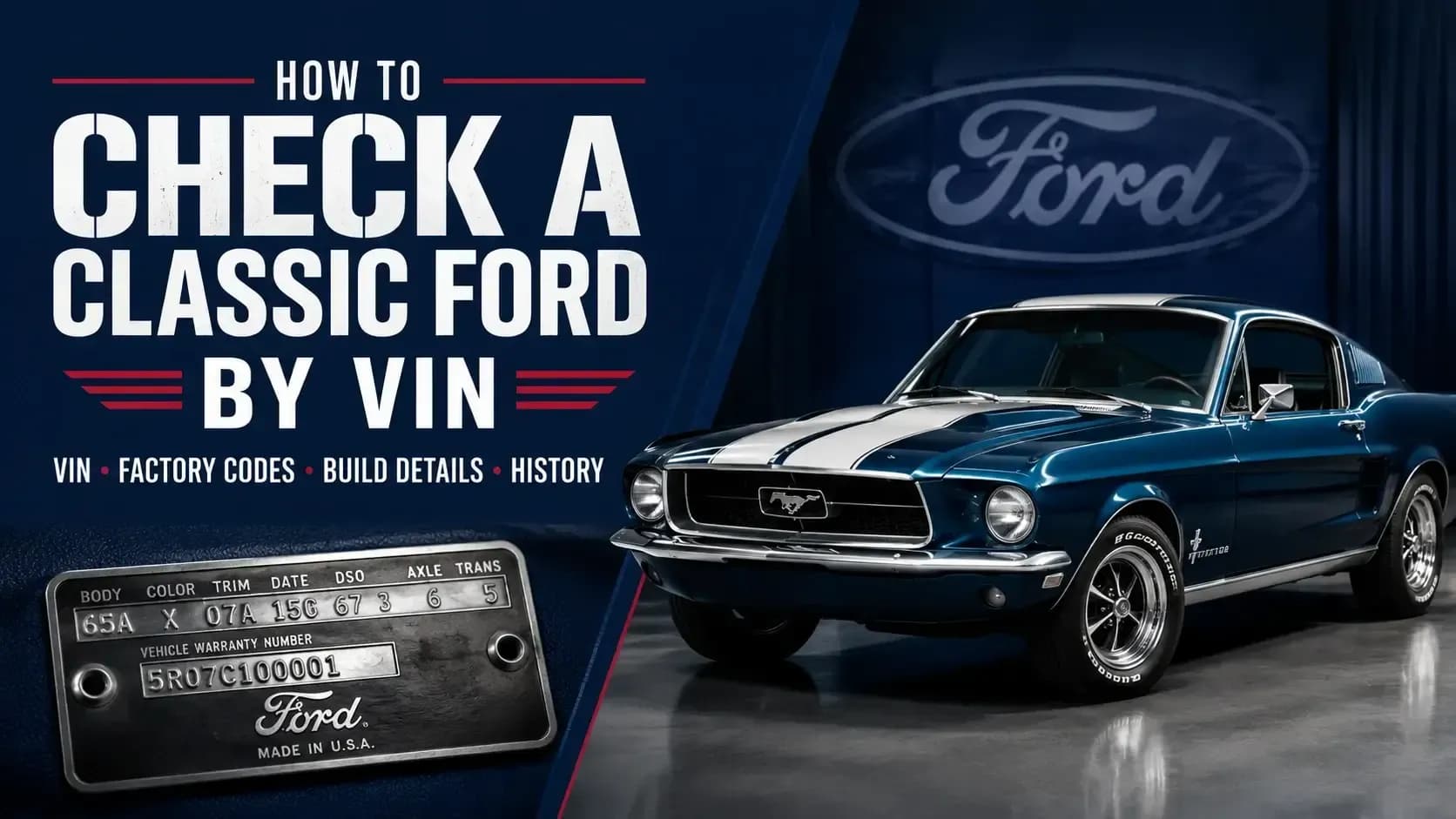
Paint, trim, axle, transmission, and build-date information may appear on a warranty plate or data tag instead of the VIN.
Here’s the thing: an 11-character VIN isn’t incomplete simply because a modern form expects 17 characters. It may be exactly right for that classic Ford.
Where Can You Find the VIN on a Classic Ford?
VIN placement changed across Ford models and years. Check more than one location when possible, especially on a restored vehicle or one that has received major body repairs.
These are the most common areas worth inspecting.
🔎 Door or Warranty Plate
Many classic Fords carry a warranty or data plate on the driver-side door, door edge, or doorjamb.
🔎 Dashboard or Instrument Panel
Some later classic models display the VIN on the dashboard where it can be viewed through the windshield.
🔎 Fender Apron or Engine Bay
Early Mustangs and certain other Fords may have a stamped VIN on the inner fender apron or nearby sheet metal.
🔎 Frame or Chassis
Classic trucks and some older cars may carry a stamped number on the frame beneath paint, grease, or surface rust.
Photograph each number before cleaning the area. Use gentle methods; heavy sanding or grinding can damage shallow stampings and create unnecessary questions later.
What Can a Classic Ford VIN Reveal?
A Classic Ford VIN check confirms the vehicle’s basic factory identity. The precise details depend on the year, model, and numbering system Ford used at the time.
Most classic VINs help answer four core questions.
Model Year and Vehicle Line
The opening code may confirm the model year and show whether the VIN belongs to the Ford being advertised.
Assembly Plant
A plant code may identify where Ford assembled the vehicle, supporting production research and restoration documentation.
Body and Engine Codes
The VIN may show the original body series and engine family assigned when Ford produced the vehicle.
Production Sequence
The final characters often identify the vehicle’s consecutive unit number within that assembly plant’s production run.
A VIN engine code confirms the engine type assigned during production. It doesn’t prove that the engine installed today is the same physical unit. Classic cars have lived long lives, and engine swaps are hardly rare.
Factory tags may add paint, trim, axle, transmission, sales district, and scheduled build information. A build sheet or production report may provide deeper equipment details when records are available.
For a clearer explanation of those documents, read Ford window sticker vs build sheet.
How Do You Run a Complete Classic Ford VIN Check?
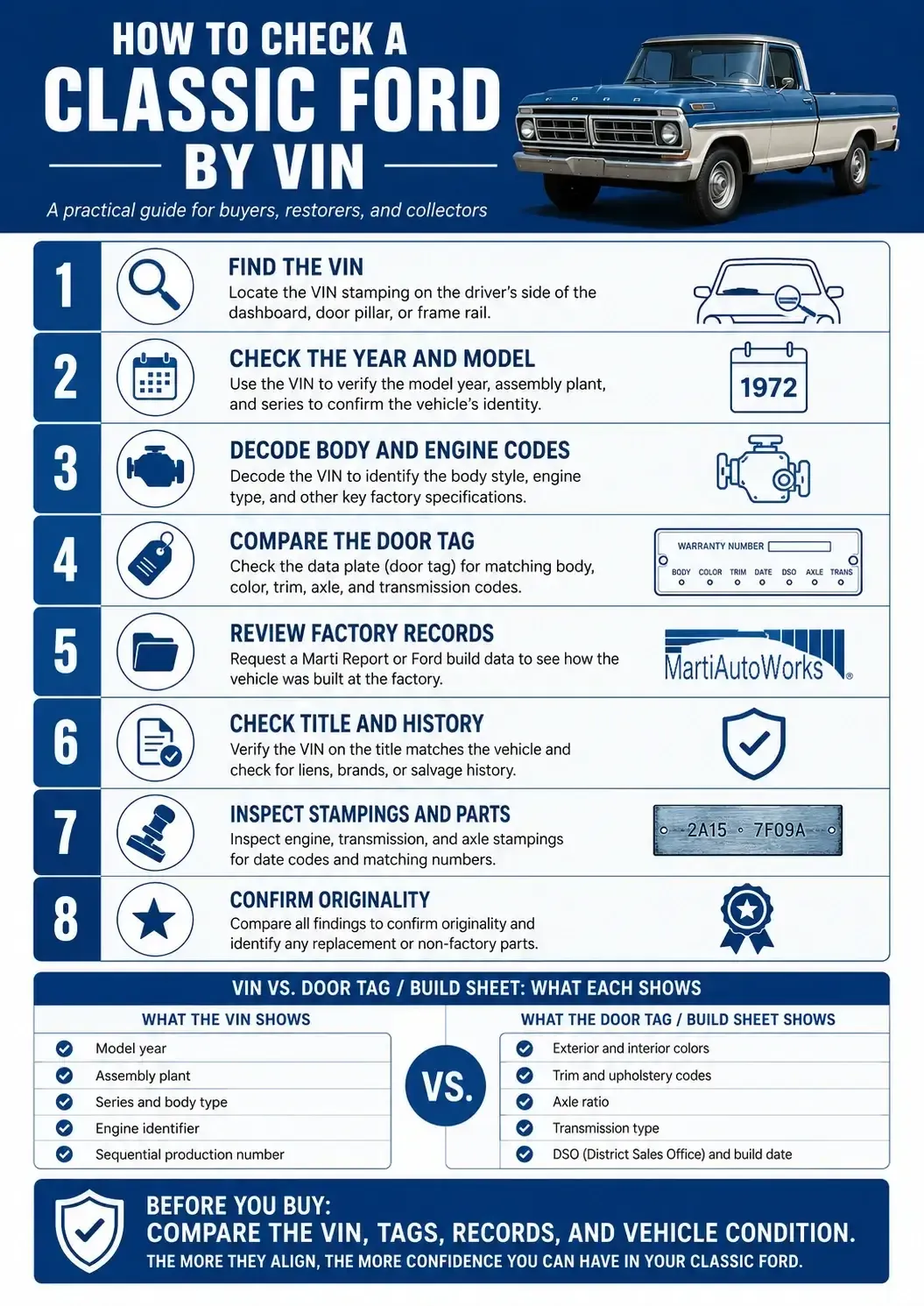
A complete check begins with the VIN and available specifications. After confirming the basic identity, choose the factory or history record that answers your next question.
Use this six-step process to keep the research focused.
Record Every Character
Photograph the complete VIN exactly as stamped, including all letters, numbers, prefixes, and unusual spacing.
Identify the Correct Year
Use the title, body features, and available records to select the correct year-specific Ford decoding reference.
Decode the Available Specs
Check the model year, assembly plant, body series, engine code, and production sequence returned by the decoder.
Compare the Factory Tags
Match the paint, trim, axle, transmission, build date, and other available codes with the vehicle.
Choose the Next Record
Use a paid build sheet for factory details or a paid history report for available past records.
Inspect the Vehicle
Compare its stampings, body panels, drivetrain, paperwork, and restoration receipts before judging authenticity or condition.
This mirrors how the service should be used. Enter the VIN first and review the available specifications. If the Ford matches, get the paid build sheet when you need factory configuration details or the paid history report when you need title, mileage, ownership, theft, auction, or service information.
You’re not collecting paperwork for its own sake. You’re checking whether Ford can tell one consistent story.
What Can Classic Ford History Records Show?
A Classic Ford vehicle history search may still provide useful information, but older vehicles often have thinner digital records than modern cars. Paper documents may matter just as much as online data.
Four record groups can help fill in the timeline.
Title and Registration Events
Available records may show title status, registration changes, state transfers, or ownership events connected to the vehicle.
Mileage and Service Records
Some reports include odometer readings, maintenance entries, or inspection records that help establish a basic timeline.
Theft and Auction Activity
A report may reveal theft records, auction appearances, sale dates, or listing history when those events were reported.
Restoration Documentation
Receipts, photographs, club records, and previous-owner notes may explain work that never entered a digital database.
Honestly, a box of dated invoices can be more useful than a short online report. Old registrations, engine receipts, paint records, and restoration photos often explain changes that a database cannot.
A sparse report does not prove the car lived a quiet life. It may simply mean much of its history remained on paper.
To understand how identity data and past events differ, read what a Ford VIN check can reveal before buying.
Classic Ford VIN Warning Signs Worth Checking
Not every mismatch means fraud. Classic Fords have survived engine swaps, collision repairs, racing modifications, repainting, and complete restorations.
The concern is change without a credible explanation.
⚠️ VIN and Title Disagreement
The stamped VIN should match the title, registration, bill of sale, and available ownership records.
⚠️ Fresh Work Around the VIN
New welds, grinding marks, altered rivets, or fresh paint near the VIN deserve professional inspection.
⚠️ Engine Code and Engine Conflict
A replacement engine can be legitimate, but it shouldn’t be described as original without supporting documentation.
⚠️ Factory Tag and Body Conflict
Paint, trim, body, axle, or transmission codes that disagree with the vehicle need a clear explanation.
A modified classic can still be a wonderful car. Some of the most enjoyable old Fords are far from factory-correct.
Just value the vehicle as it is not as a rare original combination that the seller cannot prove.
Verify the Ford Before the Restoration Story Wins You Over
Classic cars sell emotion as much as machinery. The rumble, chrome, old upholstery, and glossy restoration photos can make small inconsistencies easy to overlook.
Slow down.
Decode the VIN, confirm the available specifications, compare the tags, review the paperwork, and inspect every relevant stamping. The more those details support one another, the more confidence you can have in the Ford’s identity.
When deeper factory information is needed, check the classic Ford build sheet by VIN. Available production records can help confirm original codes, equipment, and build details before you buy, restore, or resell the vehicle.
Frequently Asked Questions
How do I decode an 11-digit classic Ford VIN?
Use a decoder or chart for the exact model and production year. Many 11-character Ford VINs identify the year, plant, body style, engine code, and production sequence.
Can a classic Ford VIN confirm the original engine?
It can identify the engine type assigned during production. It cannot prove that the engine installed today is the same physical unit.
Why does a modern decoder reject my classic Ford VIN?
Many modern tools expect 17 characters. Older vehicles may use shorter, model-specific numbers that require a dedicated Classic Ford VIN decoder.
Can I get a build sheet for a classic Ford?
Production information may be available depending on the year, model, assembly location, and surviving records. Coverage isn’t guaranteed for every classic vehicle.
Where is the VIN on a pre-1981 Ford?
Possible locations include the door area, dashboard, glove compartment, inner fender apron, engine bay, or frame. The exact position varies by model and year.
Is a clean history report enough to verify a classic Ford?
No. Compare the report with the VIN, factory tags, title, receipts, physical stampings, restoration records, and an expert inspection.