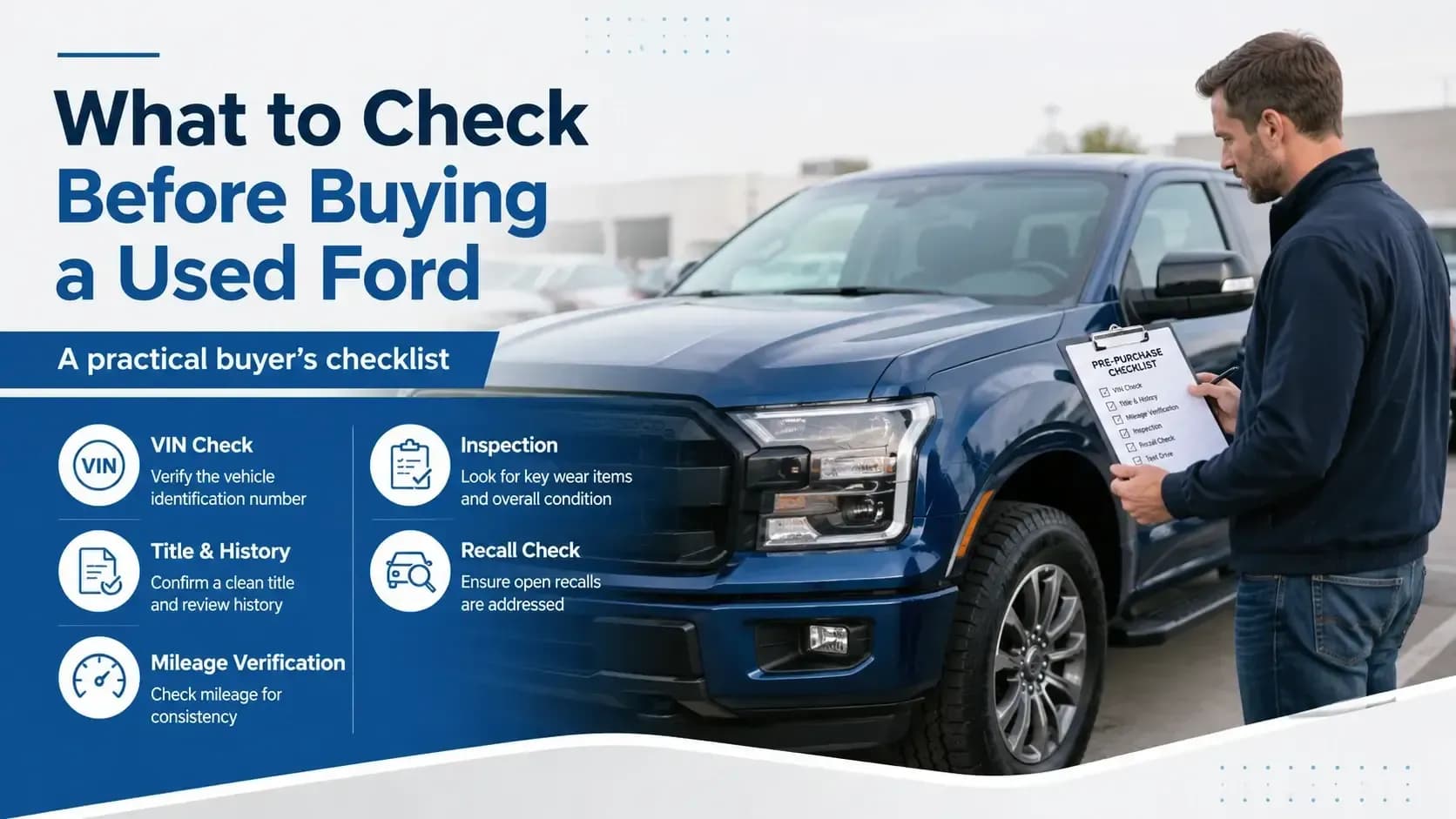
Purchasing a used Ford can be the way to go, but it is definitely not something that should be taken lightly. The presence of a nice looking picture, a pleasant seller, and an attractive price may convince you of everything.
However, the bottom line is very simple, does the vehicle meet the description? Below there is a brief guide to checking things out before purchasing a used car, specifically, a used Ford.
If you are planning to check out title, accident, mileage, lien, auction, ownership, service, or recall information prior to meeting with the seller, it is recommended to begin from obtaining a used Ford vehicle history report.
Key Takeaways
- A good used car inspection checklist starts with the VIN, title, mileage, records, and visible condition.
- A used Ford should be checked in person, not judged only by photos or seller claims.
- A vehicle history report helps, but it should work together with a test drive and physical inspection.
Start With the VIN and Paperwork
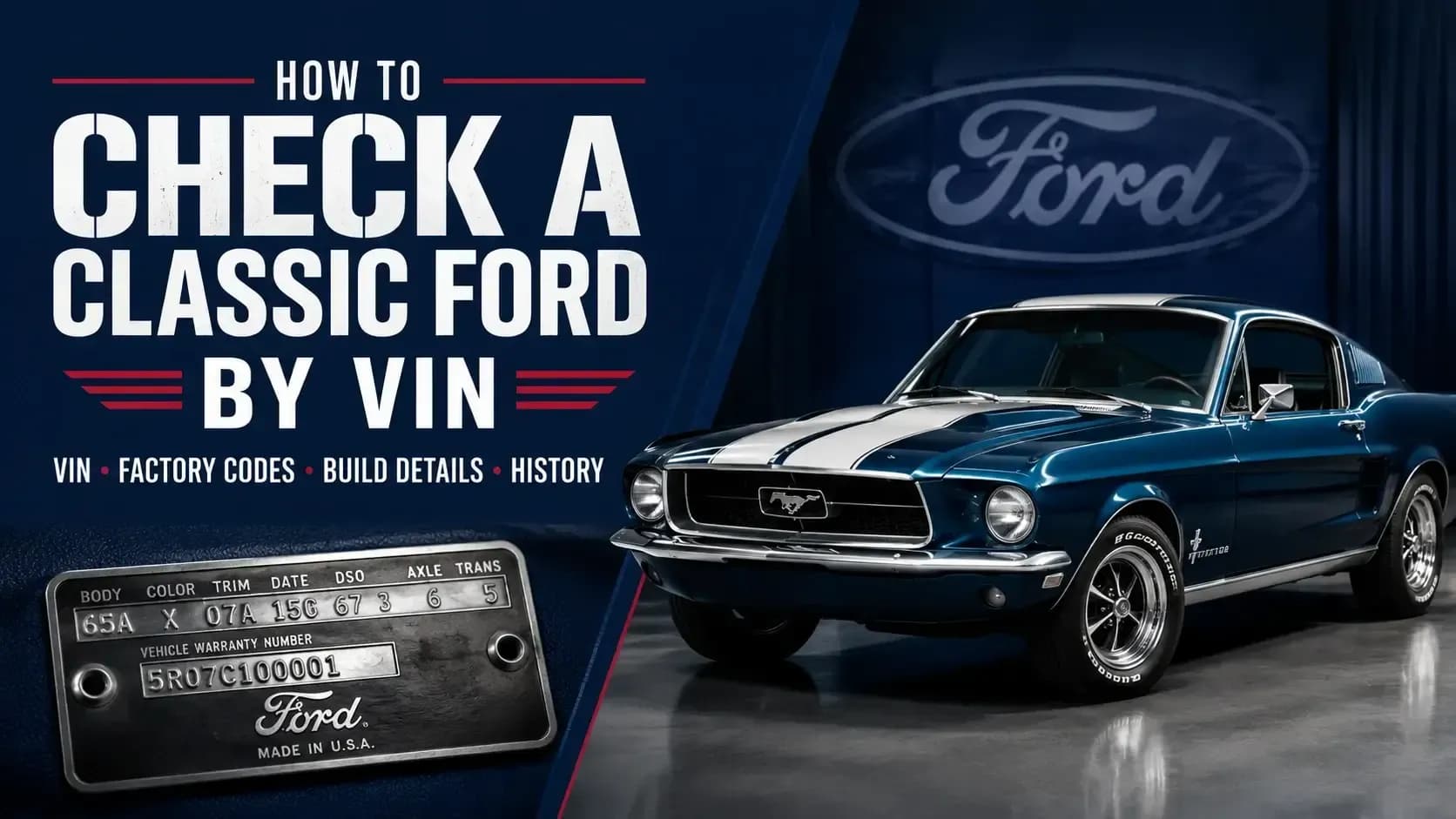
Before you meet the seller, ask for the VIN. Not later. Not “when you get there.” Ask early. The VIN is the thread that connects the Ford to its records, factory identity, title events, and mileage history.
Here are the first checks to make before you get emotionally attached to the car:
Confirm the VIN Matches Everywhere
Check the VIN on the dashboard, driver-side door jamb, title, registration, and listing. Every character should match. If the number looks altered, covered, damaged, or inconsistent, slow down and ask questions.
Check the Title Status
Look for title brands such as salvage, rebuilt, flood, lemon, junk, or manufacturer buyback. A branded title doesn’t always mean the vehicle is useless, but it changes the risk, price, insurance, and resale picture.
Compare Mileage Records
Mileage should make sense across the odometer, service records, title records, inspection notes, and seller listing. One strange mileage entry may be a mistake. A pattern of strange entries is something else.
Look for Lien or Loan Records
A lien means another party may still have a financial interest in the vehicle. Before you pay, make sure the lien is released or handled properly.
A VIN can tell you more than people think. For a deeper explanation, read what a VIN can reveal from a used Ford.
Walk Around the Exterior Slowly
This is where buyers often move too fast. They glance at the paint, nod at the wheels, and jump inside. Don’t do that. Take a slow walk around the Ford. Let your eyes adjust. A used vehicle usually leaves little clues.
Use this section as a simple exterior Used Car Checklist before the test drive:
✓ Check Paint Consistency
Look at the vehicle from different angles. If one panel looks slightly brighter, duller, or smoother than the others, it may have been repainted. That doesn’t always mean major damage, but it should make you ask why.
✓ Look at Panel Gaps
Check the spacing around the hood, doors, fenders, trunk, tailgate, and bed. Uneven gaps can point to previous repair work or poor panel adjustment.
✓ Watch for Rust
Look at rocker panels, wheel arches, lower doors, frame areas, tailgate edges, and underbody sections. Surface rust may be manageable. Structural rust is a different conversation.
✓ Inspect Glass and Lights
Check the windshield, mirrors, headlights, taillights, turn signals, and fog lamps. Moisture inside lights, mismatched lamps, or cracked glass can suggest past damage or weak maintenance.
Check the Interior Like Someone Who Has to Live With It
The cabin can tell you a lot about the owner. It doesn’t need to look new. A used Ford is allowed to have wear. But the wear should match the mileage, age, and seller’s story.
Here’s what to look for when buying a used car from the inside:
Seat, Pedal, and Steering Wheel Wear
Heavy wear on the driver seat, pedals, or steering wheel can be normal on high-mileage vehicles. But if the odometer says low mileage and the cabin looks tired, that mismatch deserves attention.
Dashboard Warning Lights
Turn the key or press the start button and watch the dash. Warning lights should come on briefly, then go off. Check engine, ABS, airbag, battery, and traction warnings should be checked before purchase.
Smell Inside the Cabin
Moldy smell may indicate leaks or prior flooding inside the car. Air freshener is not an indicator of any damage, although it can be sometimes used for masking some issues.
Electronics and Comfort Amenities
Check the functionality of windows, locks, mirrors, climate system, entertainment system, backup camera, charging ports, seat adjustments, cabin lighting, and wipers. Minor defects may turn into an annoyance after you buy the car.
Look Under the Hood and Listen
You don’t need to be a mechanic to notice basic warning signs. The goal is not to diagnose every possible issue. The goal is to spot things that need a professional look before you hand over money.
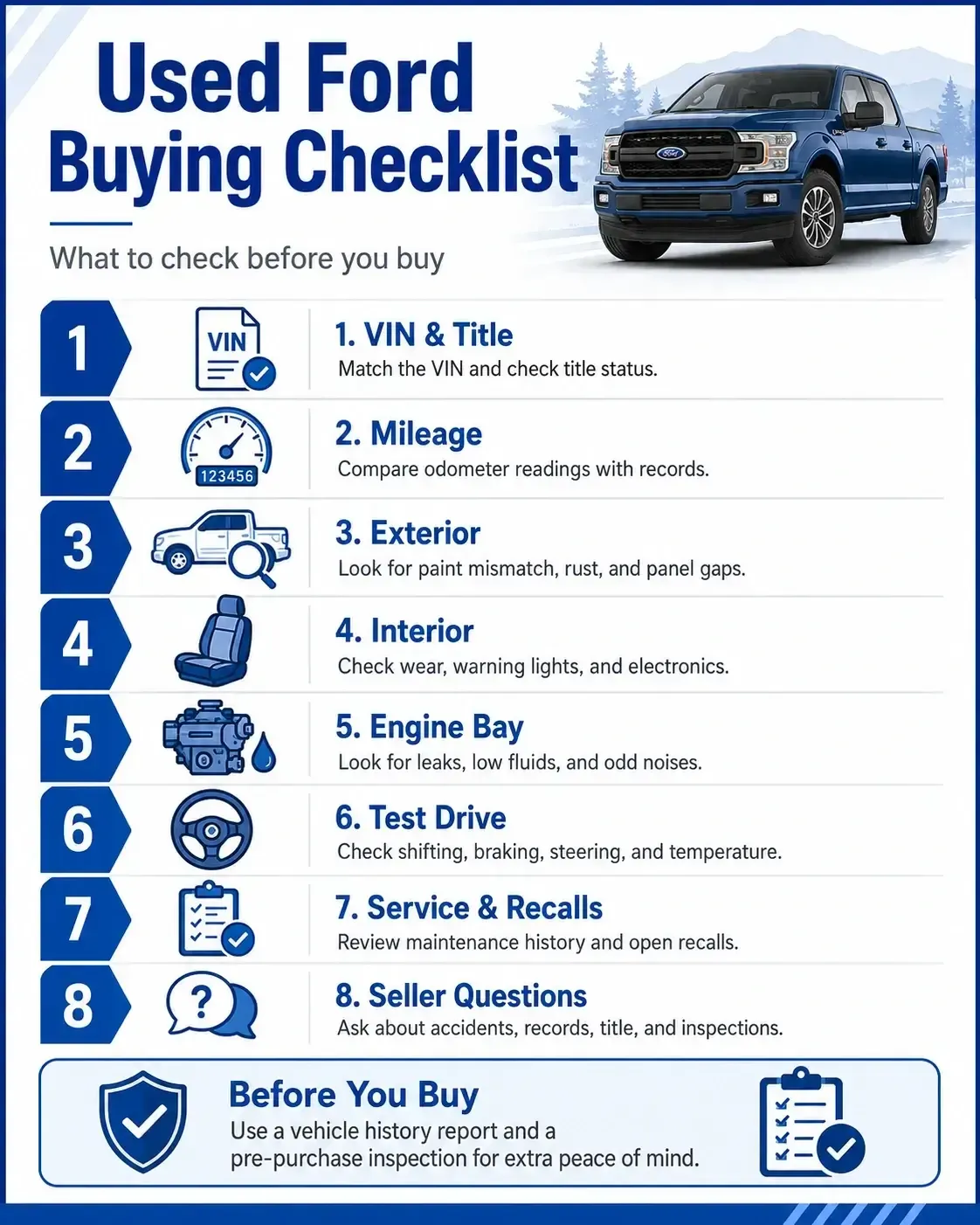
This part of how to inspect a used car is simple but important:
Check for Leaks
Look around the engine, radiator, hoses, transmission area, and under the vehicle. Fresh drips, oily buildup, or wet spots should not be ignored.
Examining Oil
The oil should be checked both for level and quality. If it is too low, smells burned, appears sludged or milk-like, then there were probably neglect issues and engine troubles.
Checking Coolant and Hoses
Coolant cannot be rusty, oily or completely drained. The hoses must be firm but not cracked, swollen or wet where it attaches.
Engine Listening
The engine needs to be listened to when starting the car. If there are sounds like knocking, ticking, squealing, rattling, rough idle, vibration, then this means something.
Take the Test Drive Seriously
A test drive is not just a quick lap around the block. It’s your chance to feel how the vehicle behaves when it starts, shifts, turns, brakes, and sits in traffic. This is where a pretty listing either holds up or starts to wobble.
Before you decide, check these driving signs:
Start From Cold
If possible, see how the engine starts when cold. Some issues hide once the vehicle warms up.
Feel the Transmission
Shifts should feel smooth and predictable. Harsh shifts, slipping, hesitation, or jerking can point to transmission or drivetrain trouble.
Test the Brakes
Brake at low and moderate speeds. Listen for grinding and feel for shaking, pulling, or a soft pedal.
Drive on Rougher Roads
A bumpy road can reveal suspension clunks, loose steering, rattles, or worn bushings.
Try Tight Turns
Turn left and right at low speed in a parking lot. Listen for clicking, groaning, or binding from the front end.
Watch the Temperature Gauge
The temperature should stay steady. If it climbs quickly or acts strangely, don’t brush it aside.
Review Service Records and Recalls
A used Ford with service records is easier to trust. Not perfect, just easier. Maintenance history gives you context, and context matters when the vehicle has miles on it.
Before buying, review these items carefully:
Oil and Fluid Services
Look for regular oil changes, coolant service, transmission service, brake fluid service, and differential service when relevant.
Brake and Tire Records
Brakes and tires are normal wear items, but they still affect your first-month costs. A “good deal” feels less good when it needs tires immediately.
Repeated Repairs
If the same problem appears again and again in invoices, ask what was actually fixed. Repeated issues can point to poor diagnosis or an unresolved fault.
Open Recalls
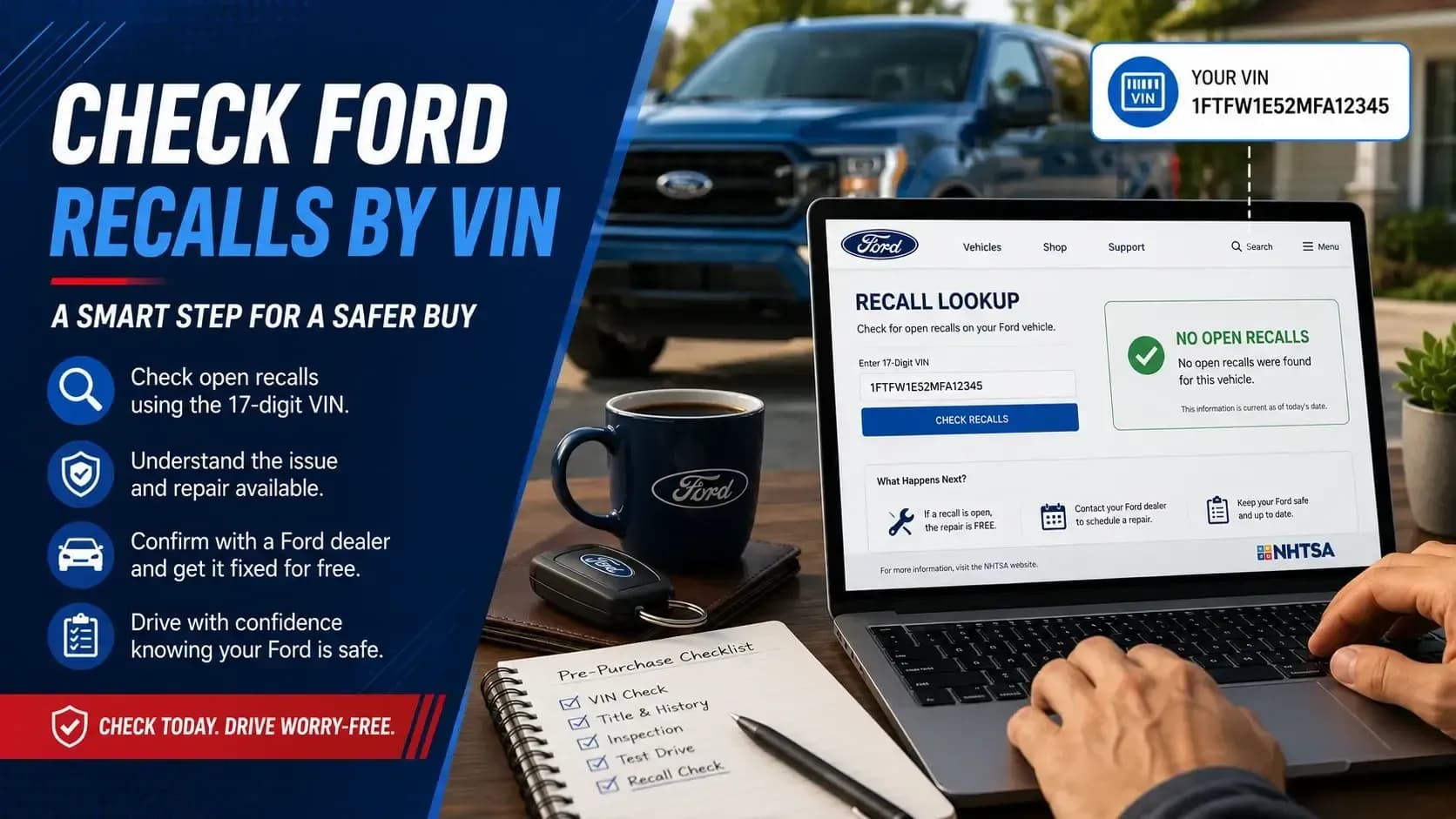
Open recalls should be checked before purchase, especially on daily drivers, family SUVs, and work trucks. If you want a focused guide for this step, read checking Ford recalls by VIN before buying.
Ask the Seller Better Questions
You know what? The seller’s answers matter almost as much as the car. A calm, clear answer with paperwork feels different from a rushed answer with no proof.
These are useful questions to ask when buying a used car:
Why Are You Selling It?
The answer may be simple. Still, listen for vague explanations or details that change later.
Has It Been in an Accident?
Ask directly. Then compare the answer with paint condition, panel gaps, service records, and history records.
Do You Have Service Records?
Receipts, invoices, and maintenance logs help support the seller’s claims.
Are There Any Current Problems?
Most used cars have something. A seller who explains issues clearly is easier to trust than one who says “nothing” too quickly.
Is the Title in Your Name?
Make sure the seller has the legal right to sell the vehicle.
Can I Get a Pre-Purchase Inspection?
A fair seller should allow it. If they refuse, that’s a sign to pause.
Know the Red Flags Before You Buy
Some issues are small. Others are strong warning signs. One red flag may not end the deal, but several together should make you rethink it.
Here are common used car red flags:
⚠️ VIN Mismatch
The VIN should match across the vehicle and documents. No creative explanations needed.
⚠️ Branded Title
Salvage, rebuilt, flood, lemon, or junk branding affects risk and value.
⚠️ Odometer Concerns
Mileage inconsistencies can affect price, trust, insurance, financing, and resale.
⚠️ Seller Pressure
If the seller rushes you, avoids questions, or refuses inspection, be careful.
⚠️ Warning Lights
Dashboard warnings should be diagnosed before purchase.
⚠️ Heavy Rust
Rust on structural areas can become expensive and unsafe.
⚠️ Missing Paperwork
No title, no service records, or unclear ownership should slow the deal down.
⚠️ Price Far Below Market
A low price can be real. It can also be bait. Find the reason before getting excited.
Final Thoughts: Buy the Ford, Not the Story
A used Ford can be a solid buy. F-150s, Mustangs, Explorers, Escapes, Broncos, Rangers, and Super Duty trucks all have loyal buyers for a reason. But even a good model can become a bad purchase if the records, condition, and price don’t line up.
The smartest used car buying tips are not flashy. Check the VIN. Read the title. Inspect the body. Test the brakes. Review service records. Ask direct questions. Then sleep on it if you need to.
If the Ford still looks right after all that, you’re in a much better position to buy with confidence. Before you commit, use a Ford vehicle history report to review available title, accident, mileage, lien, auction, ownership, service, and recall records.
Frequently Asked Questions
What should I look for first when purchasing a used Ford?
Firstly, the VIN, title status, mileage, seller's identity, and any documentation regarding the car need to be investigated. Then comes the examination of the exterior, interior, engine, tires, test drive behavior, service history, and recall status of the vehicle.
What are the most critical checks on a used car inspection checklist?
The most crucial checks include the verification of VIN accuracy, title status, mileage consistency, accident history, mechanical state of the vehicle, service records, and recall status.
How can I inspect a used car if I am not a mechanic?
One can start from checking tires, paint, lights, interior, warning lights, presence of fluid leaks, unusual sounds, and test drive behavior. After that, one needs to consult a mechanic about
What are the major warning signs of used cars?
The major warning signs include the following: VIN discrepancy, title brand, inconsistency in miles, seller putting the buyer under pressure, warning lights, refusal for inspection, odor of flood damage, excessive rusting, and lack of papers.
What questions should I ask while buying used cars?
There should be the following questions: the reason behind the sale of the car, accident history, service records, title, and the possibility of an inspection prior to purchase.
Is there any reason for not buying a used Ford with an open recall?
Not always because the presence of an open recall doesn't mean that you shouldn't buy that car. You need to know more about the recall, availability of the parts, and time required to repair the car.
Is a vehicle history report enough before buying?
No. A history report is useful, but it should be combined with a physical inspection, test drive, title check, service record review, recall check, and pre-purchase inspection.
What should I inspect before buying a used Ford truck?
Check towing equipment, frame condition, rust, suspension, 4WD operation, transmission behavior, tires, service history, accident records, and whether the truck matches the seller’s claims.